What the cartridge actually does
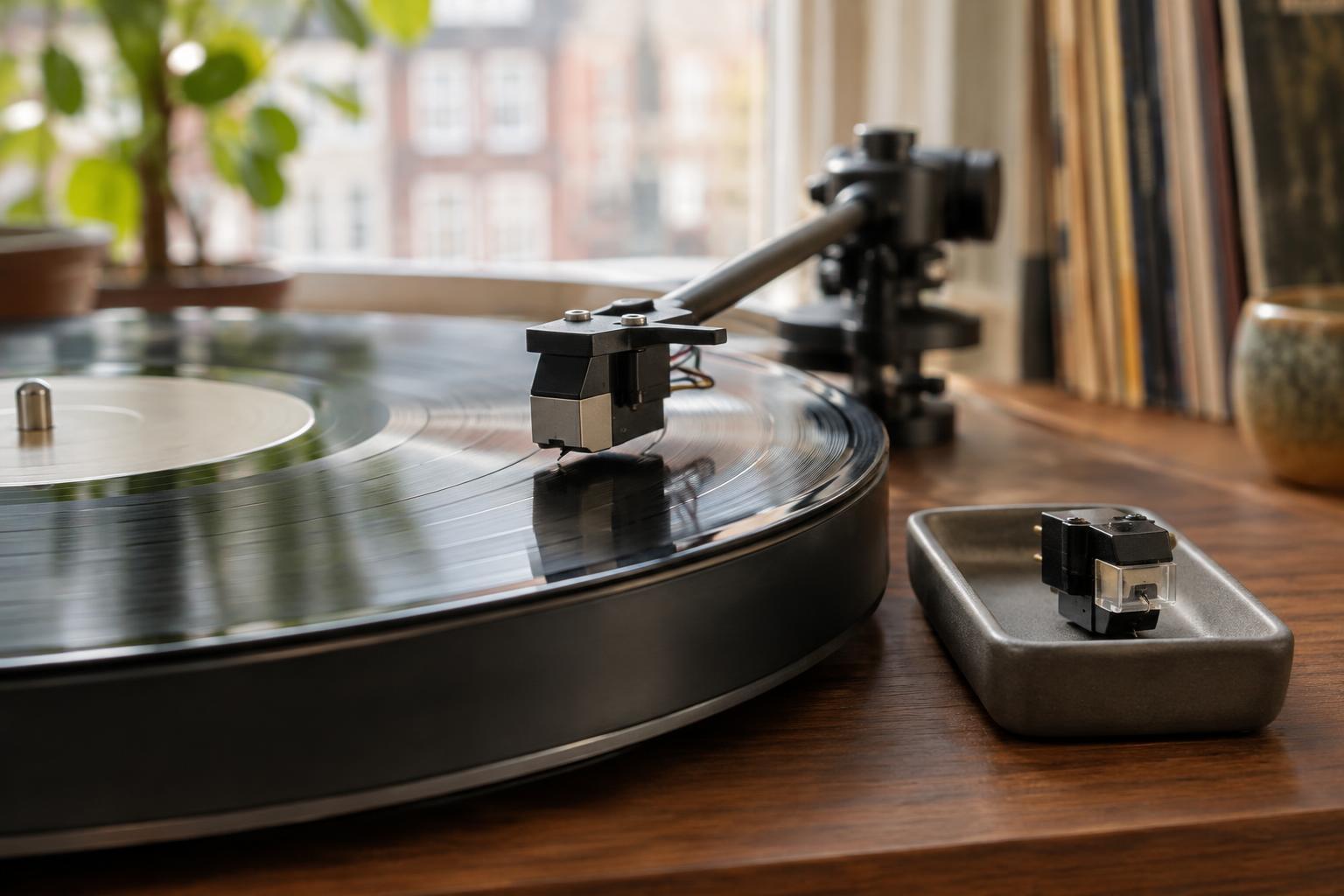
At the end of a tonearm, the stylus traces the changing shape of a record groove. Those tiny movements pass through a cantilever to a mechanism that generates an electrical signal. Your phono stage then amplifies that signal and applies the equalization needed for record playback. Both moving-magnet (MM) and moving-coil (MC) cartridges perform this same job; the names describe which part of the generating mechanism moves.
In a typical MM cartridge, magnets move in relation to fixed coils. In an MC cartridge, small coils move within a magnetic field. That distinction affects output level, the kind of phono input required and, often, what happens when the stylus wears out. It does not guarantee that one cartridge will sound better than another. The stylus shape, cartridge construction, setup, tonearm match and condition of the record all matter.
Output level and phono-stage compatibility
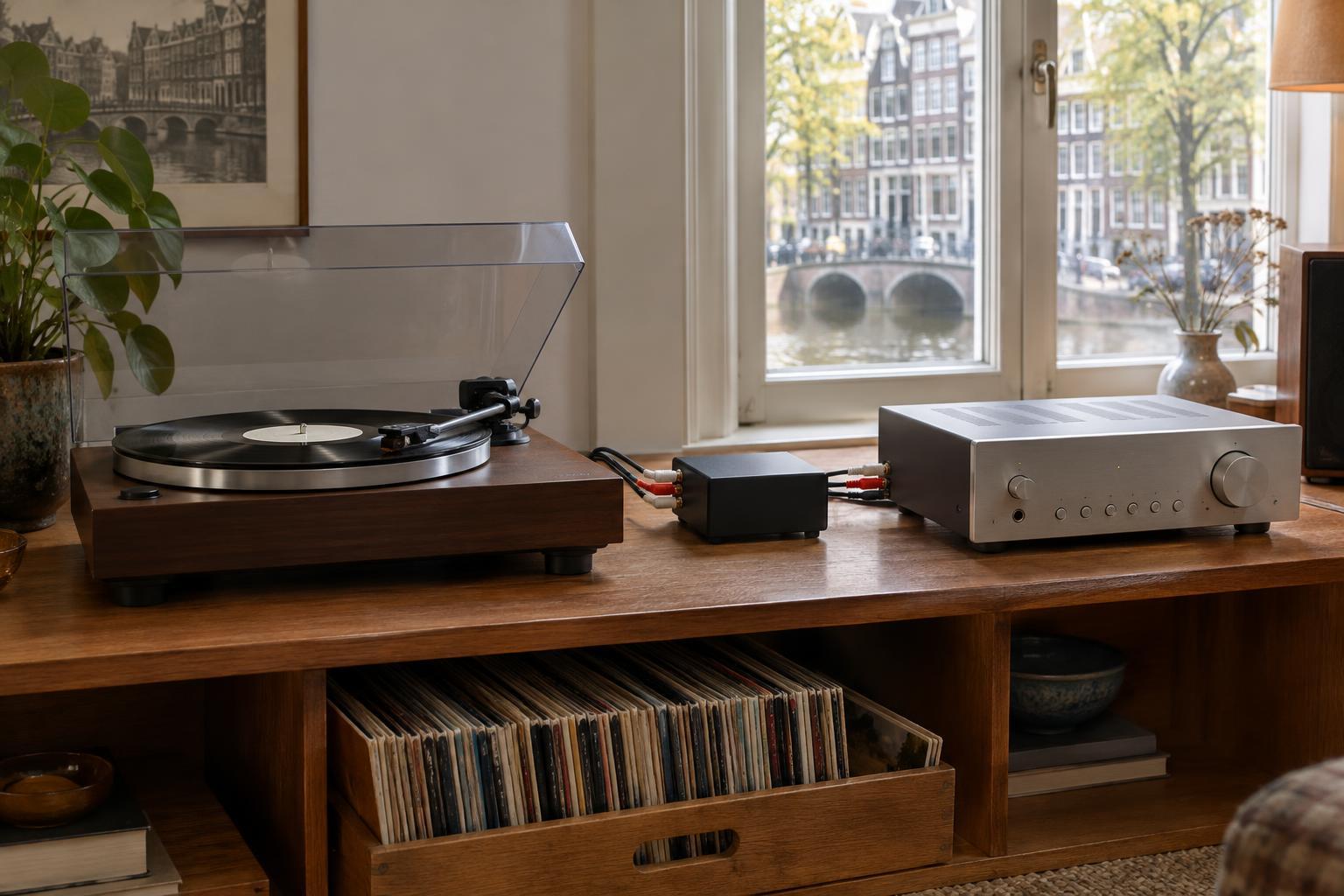
Most MM cartridges produce a signal that a standard MM phono input can handle. Many integrated amplifiers and standalone phono stages include one. If your turntable has a built-in phono preamp, check its specifications rather than assuming it accepts every cartridge type. An MM cartridge is usually the simpler starting point when you are working with an existing system.
MC cartridges need a closer look at output. Low-output MC models generally require an MC-compatible phono stage, or a suitable step-up device feeding an MM stage. High-output MC models may be designed to work with an MM input, but you should confirm the cartridge maker’s recommendation. A low-output cartridge connected to an MM-only input may play very quietly and with more audible noise when you turn up the volume.
Phono-stage settings also matter. MM cartridges commonly have recommended capacitive loading, while MC cartridges may have recommended resistive loading. You do not need to master the terminology before buying, but you should check that your phono stage provides settings appropriate for the specific cartridge you choose.
Stylus replacement and long-term cost
For many MM cartridges, the stylus assembly can be removed and replaced without changing the cartridge body. This can make routine maintenance straightforward, provided a compatible replacement is available. It also lets you replace a worn stylus while keeping a cartridge you already like. Not every MM model works this way, so check before treating replaceability as a given.
Most MC cartridges do not offer a user-replaceable stylus assembly. When the stylus wears or is damaged, the options may include a manufacturer exchange, a specialist rebuild or a new cartridge. Those paths can involve different costs and may not preserve the cartridge’s original performance in exactly the same way. If you are comparing prices, consider the likely replacement route as well as the initial purchase.
Setup matters more than the label
Neither design is a shortcut around careful installation. The cartridge needs to suit the tonearm, and it needs to be aligned and balanced correctly. Set tracking force within the cartridge maker’s specified range, then set anti-skate according to the turntable’s guidance. Too little tracking force is not automatically gentler on records: poor tracking can make the stylus lose secure contact with the groove.
Before fitting a cartridge, check the mounting style, the tonearm’s supported cartridge weight and any guidance on cartridge compliance. If these details are unclear, a dealer or experienced technician can help assess the match. Keep the stylus clean using a method approved for it, handle the cantilever cautiously and judge the sound with clean records you know well. A modest cartridge installed well can be more satisfying than an expensive one installed poorly.
Which should you choose?
Choose MM if you want a relatively straightforward path into vinyl listening, have an MM-only phono stage or value the possibility of replacing the stylus yourself. Choose MC if a particular model appeals to you and your tonearm, phono stage and maintenance budget can support it. An MC cartridge is an option, not an automatic upgrade.
Start with the equipment you own. Find your phono input’s supported cartridge types, then compare candidate cartridges’ output, loading guidance, weight and recommended tracking force. Finally, check the cost and availability of a future stylus replacement or cartridge service. Those practical checks will narrow the choices more usefully than a broad claim about which design sounds best.