What an outer sleeve actually protects
A record jacket takes a little wear every time it is pulled from a shelf, carried in a bag or set beside a turntable. An outer sleeve places a replaceable layer between the printed cover and those everyday points of contact. It can reduce surface scuffs, fingerprints and rubbing against neighbouring jackets. It also keeps much of the ordinary shelf dust off the artwork.
An outer sleeve is not a substitute for careful storage. It will not prevent a bent corner if a record is dropped, and an open sleeve will not make a jacket waterproof. Its main value is in reducing small, repeated marks while still letting you see and handle the cover. For collectors who browse their shelves often, that modest protection can make a noticeable difference over time.
Choose a sleeve that fits the jacket
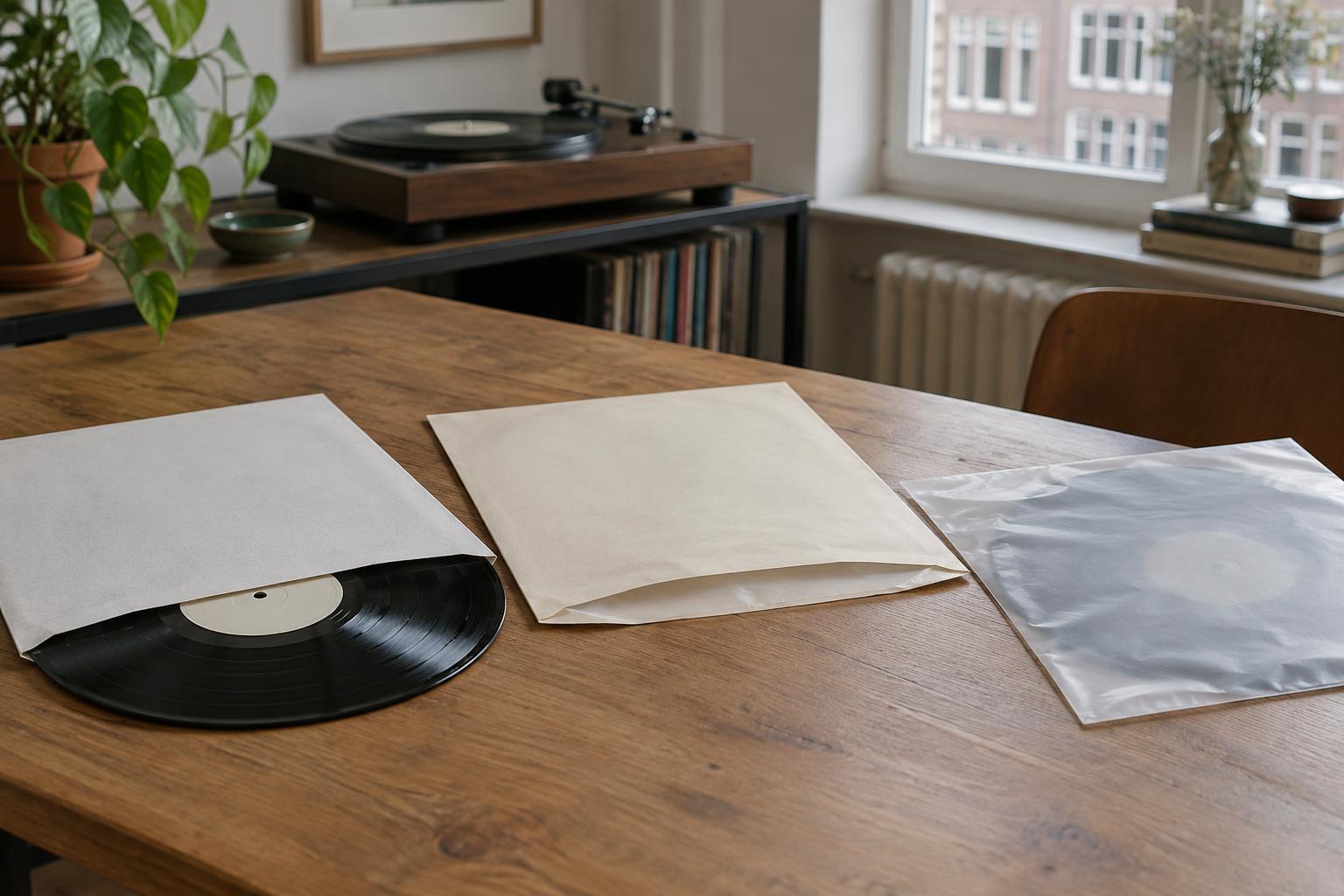
Most outer sleeves are made from clear polyethylene or polypropylene. Either can work well when the sleeve is clean, flexible and suited to the jacket. Clarity and feel are useful preferences, but fit matters more: a single-LP jacket should slide in without force, while a thick gatefold or multi-record set may need a roomier sleeve. Check the dimensions given by the sleeve maker rather than assuming every LP cover is the same thickness.
A sleeve that is too tight can catch corners, put pressure on a gatefold’s edges or make the record awkward to remove. One that is far too loose can bunch up on the shelf. If a jacket still has tight shrink wrap around it, consider whether that wrap is pulling on the corners before adding another layer. For long-term storage, many collectors favour polyethylene or polypropylene over soft PVC, which can be less suitable for prolonged contact with record packaging.
Fit it without catching the corners
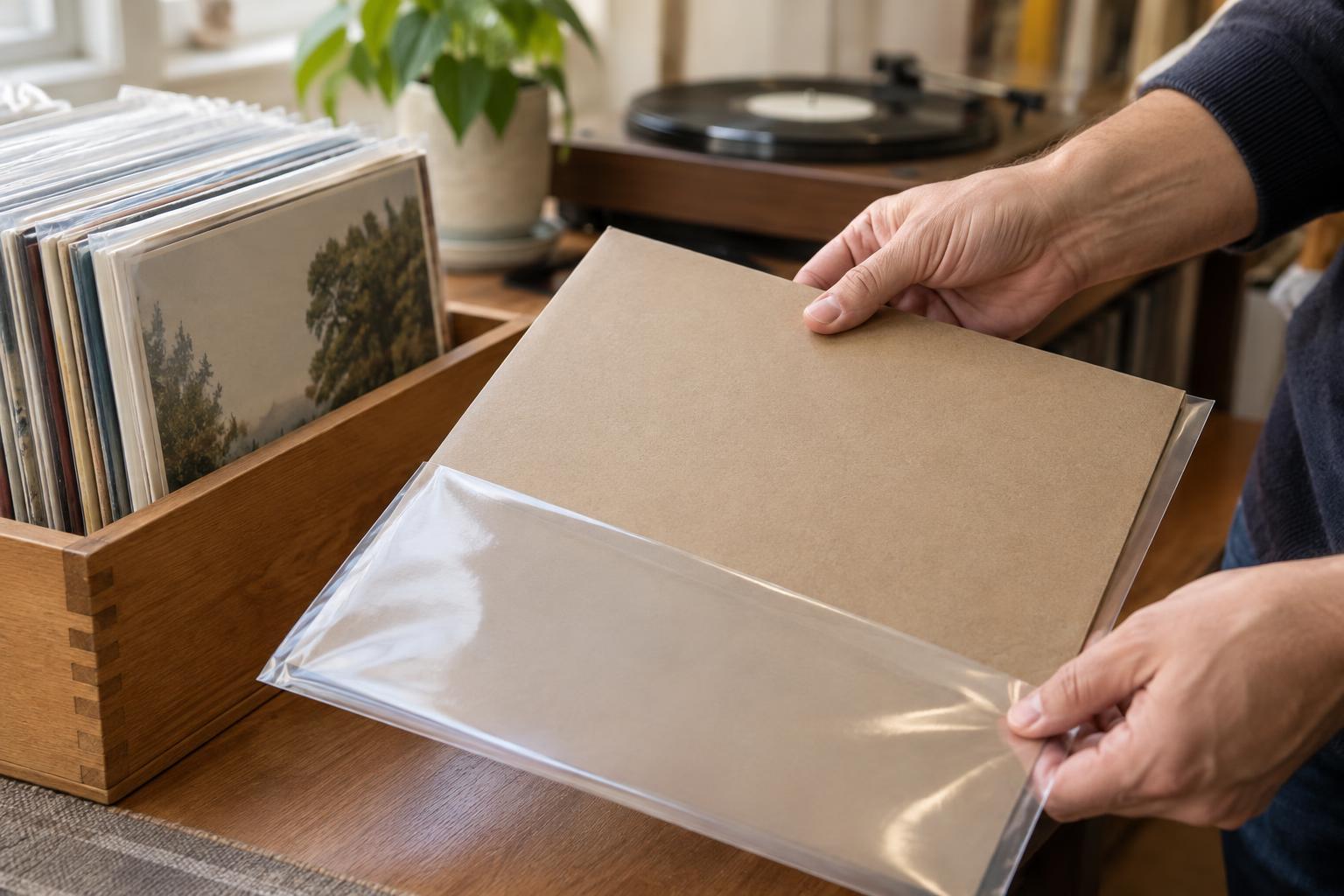
Start with clean, dry hands and a clear surface. Hold the outer sleeve open with one hand and guide the jacket into it with the other. Feed in one edge evenly, keeping the jacket straight rather than pushing a single corner ahead. If the corner catches on a seam, back the jacket out slightly and open the sleeve wider. Forcing it risks creasing the cover or splitting a sleeve that is too small.
Once the jacket is inside, smooth the sleeve gently so its seams sit alongside the jacket edges. There should be enough room to remove the album again without tugging at the artwork. If a gatefold will not go in comfortably while closed, try a larger sleeve; bending the cover to make it fit defeats the purpose. Sleeve the jacket itself, not a loose stack of inserts that could slide against its edges.
Decide which way the opening faces
There is no single orientation that suits every shelf. With the outer sleeve opening at the top, you can usually lift the jacket out while leaving the sleeve among the records. Facing the opening to the side can make it convenient to slide a jacket in and out, though you may want to position it so the jacket does not drift toward the open edge as you browse.
Some collectors turn the outer opening away from the jacket’s opening to make a less direct path for dust. That is a reasonable preference, not a seal. Choose an arrangement that lets you handle the album without scraping its edges. Keep the record itself in a suitable inner sleeve; the outer sleeve is there to protect the jacket, not to replace the inner sleeve’s contact with the disc.
Store sleeved records with room to move
Stand records upright on a stable shelf and leave enough space to pull one out without dragging its neighbours along. Packed shelves create friction even when every jacket has an outer sleeve, while leaning stacks can put pressure on covers. Keep the shelf away from damp areas and prolonged heat, and deal with any spill promptly rather than relying on plastic to keep it out.
Inspect sleeves as you browse. A dusty or torn sleeve may be worth wiping or replacing, and a cloudy sleeve can hide artwork you would otherwise enjoy. The goal is simple: make the protective layer easy to live with. If you can take out an album, enjoy its cover and put it back without a struggle, the sleeve is doing its job.