What the speed setting changes
A turntable’s speed setting tells the platter how many revolutions to make each minute. The three speeds you are most likely to encounter are 33⅓, 45 and 78 rpm. A record played at the wrong speed changes both duration and pitch: too fast sounds high and hurried, while too slow sounds low and drawn out. Choosing the right setting is the first step toward hearing the recording as intended.
Speed is not the same thing as record size. Most 12-inch LPs play at 33⅓ rpm, and many 7-inch singles play at 45 rpm, but there are exceptions in both directions. A 12-inch single may play at 45 rpm, and a 7-inch record may play at 33⅓. Check the label, sleeve or runout area for a printed speed rather than relying on diameter alone.
Choosing between 33⅓ and 45 rpm
For a typical album, select 33⅓ rpm before placing the stylus on the lead-in groove. For a single, look for the speed on its label. If a record has a large centre hole, you may also need a 45 rpm adapter to centre it on the spindle; the adapter does not determine its playing speed. Smaller-hole singles can go directly on a standard spindle.
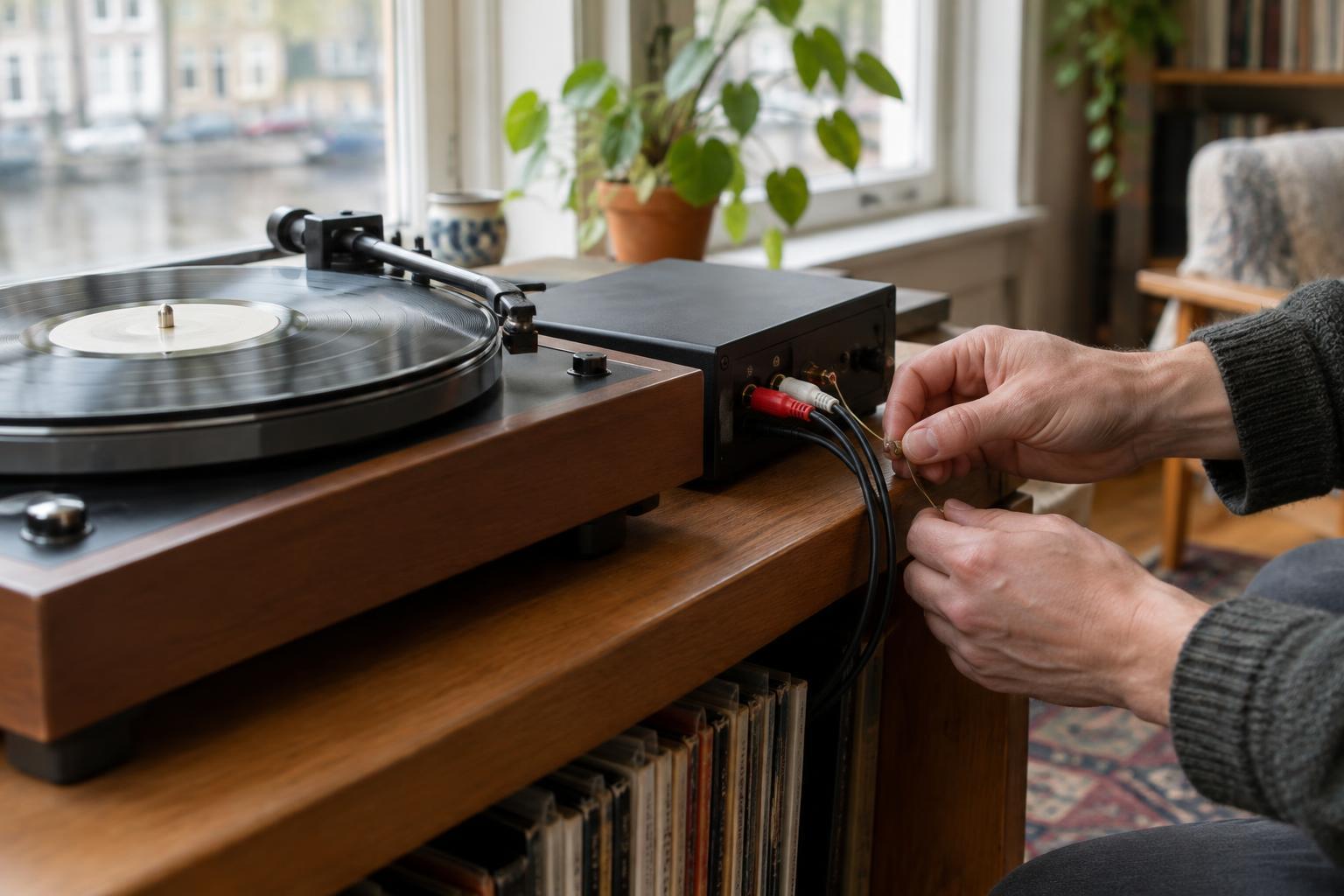
Some turntables change speed with a switch or button. Others require you to move a belt onto a different motor pulley step. Consult the turntable’s instructions before changing a belt, and make the adjustment with the motor stopped if that is what the design calls for. After switching speeds, give the platter a moment to settle before lowering the stylus.
If the printed speed is missing, start with clues from the record’s format and any information on its sleeve. You can also listen briefly at a low volume: voices and familiar instruments often make a substantial speed error obvious. Lift the stylus and change the setting rather than letting a whole side play at the wrong speed.
Why 78 rpm needs extra attention
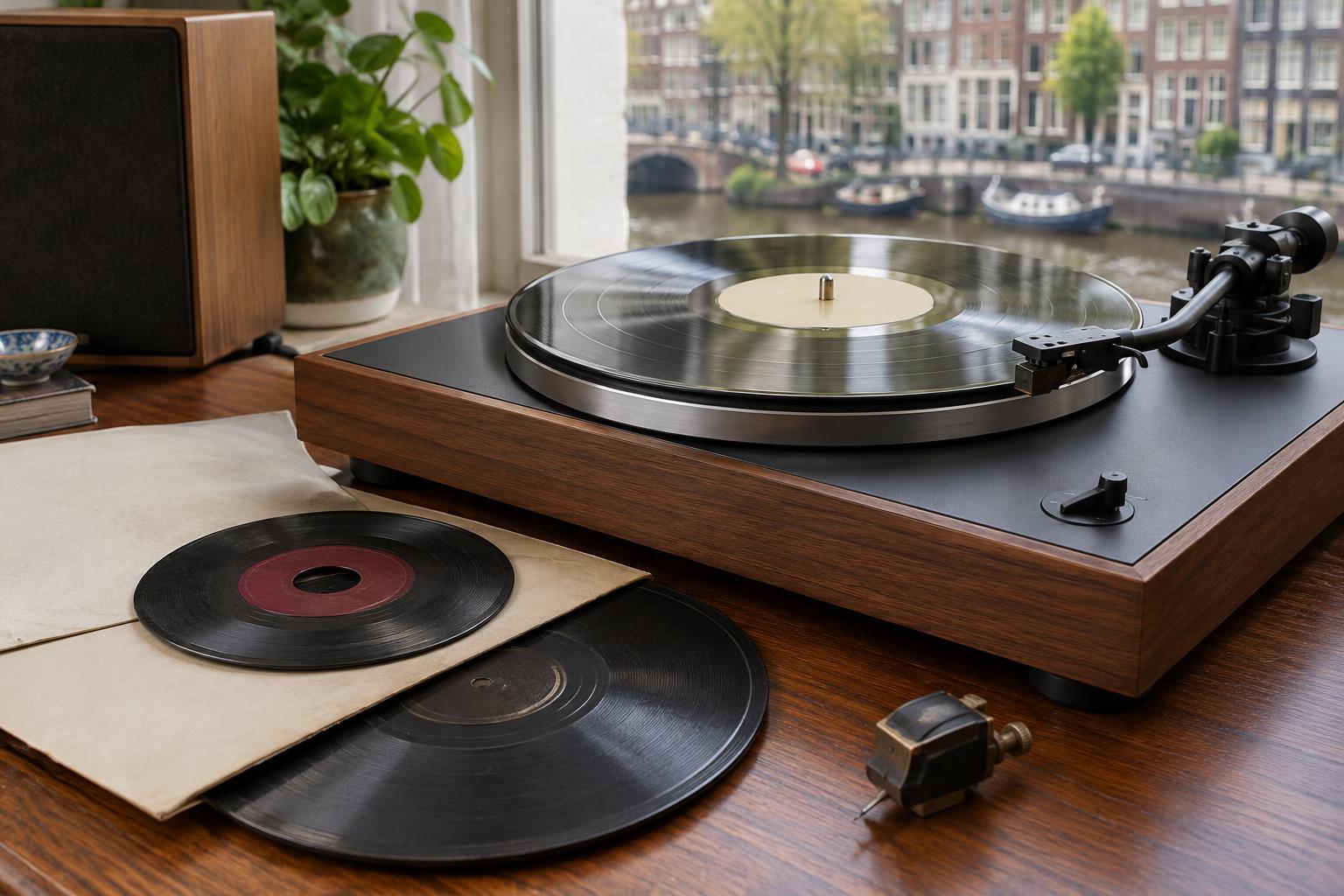
A 78 is not simply an LP played faster. Many older 78 rpm discs use wider grooves than modern LPs and singles, so they generally require a stylus made for 78s. A standard LP stylus may ride poorly in the groove and produce distorted sound or unnecessary wear. The material matters too: many 78s are made of shellac or other brittle compounds, rather than the flexible vinyl familiar to most collectors.
To play a 78, first confirm that your turntable supports that speed. Then check whether your cartridge can take an appropriate 78 stylus, or whether you need a separate cartridge and compatible headshell. Follow the cartridge maker’s guidance for stylus type and tracking force; do not assume that swapping the speed setting alone makes a modern turntable ready for an older disc.
Playback equalization can be another consideration. Modern phono stages commonly use RIAA equalization, while older records were not all made to one playback standard. A standard setup can still let you hear a 78, but its tonal balance may differ from what a more specialized setup could provide. For an inherited or unfamiliar disc, identify its format before playing or cleaning it. Avoid treating a brittle 78 as if it were an ordinary vinyl LP.
Check the equipment, not just the label
Most turntables intended for LPs and singles offer 33⅓ and 45 rpm; 78 rpm support is less universal. A speed selector marked 78 confirms that the platter can turn at that rate, but it does not confirm that the fitted stylus is suitable. Likewise, a turntable with the right stylus still needs a way to reach the correct speed. Check both requirements before buying an older record you hope to play.
If playback seems slightly off even at the indicated setting, consider a setup issue before questioning the record. On a belt-drive turntable, an incorrectly positioned, worn or slipping belt can affect speed. Some models offer pitch adjustment or a speed-checking feature; others are intended to run at their preset speeds. Use the method specified for your model rather than adjusting controls at random.
Make a quick pre-play routine
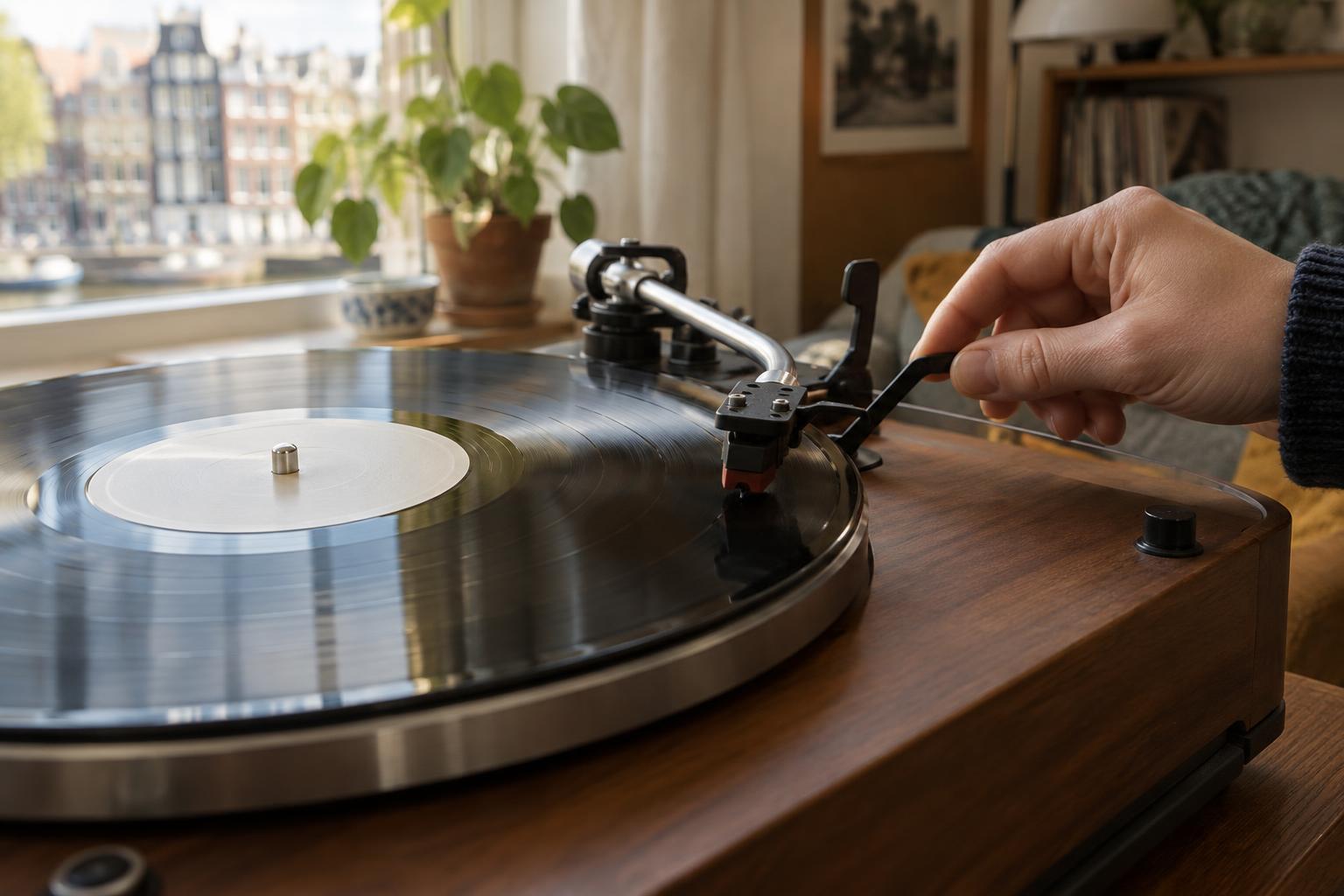
Before each side, read the speed marking, set the turntable accordingly and make sure the record is centred. Check that the stylus fitted is appropriate for the record, especially if you switch between modern records and 78s. Lower the tonearm gently, then listen for an obviously incorrect pitch or uneven rotation. A few seconds of attention can prevent a confusing listening session and, with older discs, help you avoid using incompatible equipment.
When crate-digging, a printed speed is useful information to note alongside the record’s condition. If the marking is unclear, keep that uncertainty in mind until you can examine the disc and your playback options at home. The goal is not to memorize a rule for every size and format; it is to let the record’s markings and your equipment guide the choice.