Start with the signal path
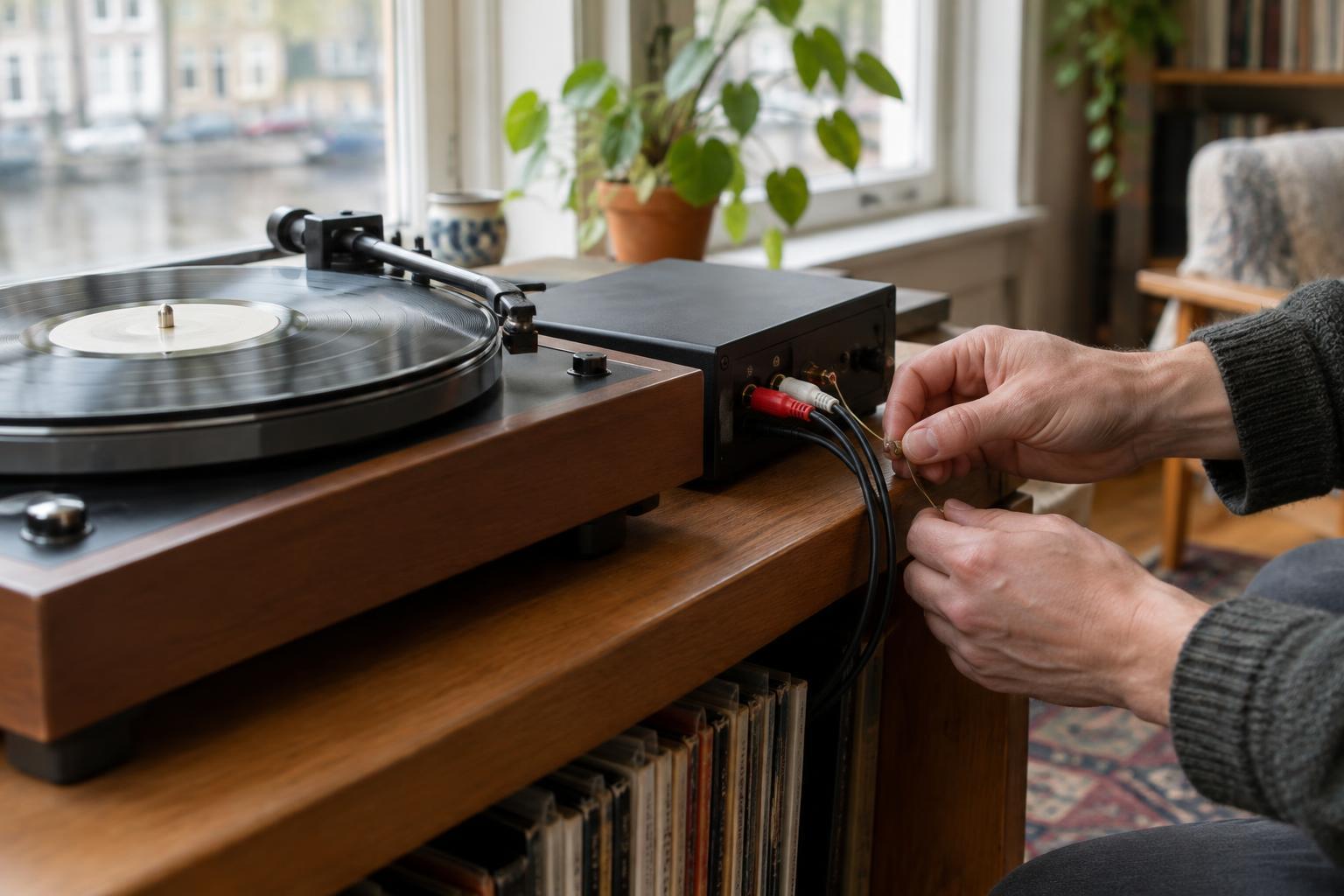
Choosing speakers for a turntable is easier once you separate two jobs: preparing the cartridge’s signal and providing enough power to drive the speakers. Most turntables output a low-level phono signal. A phono preamp, also called a phono stage, brings that signal up to line level and applies the equalization records require. After that, an amplifier drives the speakers.
Some turntables have a built-in phono preamp, often with a switch marked PHONO and LINE. If yours does not, you need a phono input on another component or a separate phono preamp. Do not assume that a speaker’s ordinary RCA or 3.5 mm input accepts a turntable’s phono output. Check the labels and manuals before connecting anything. A mismatched connection may produce sound that is very quiet and thin rather than the listening experience you expected.
What powered speakers simplify
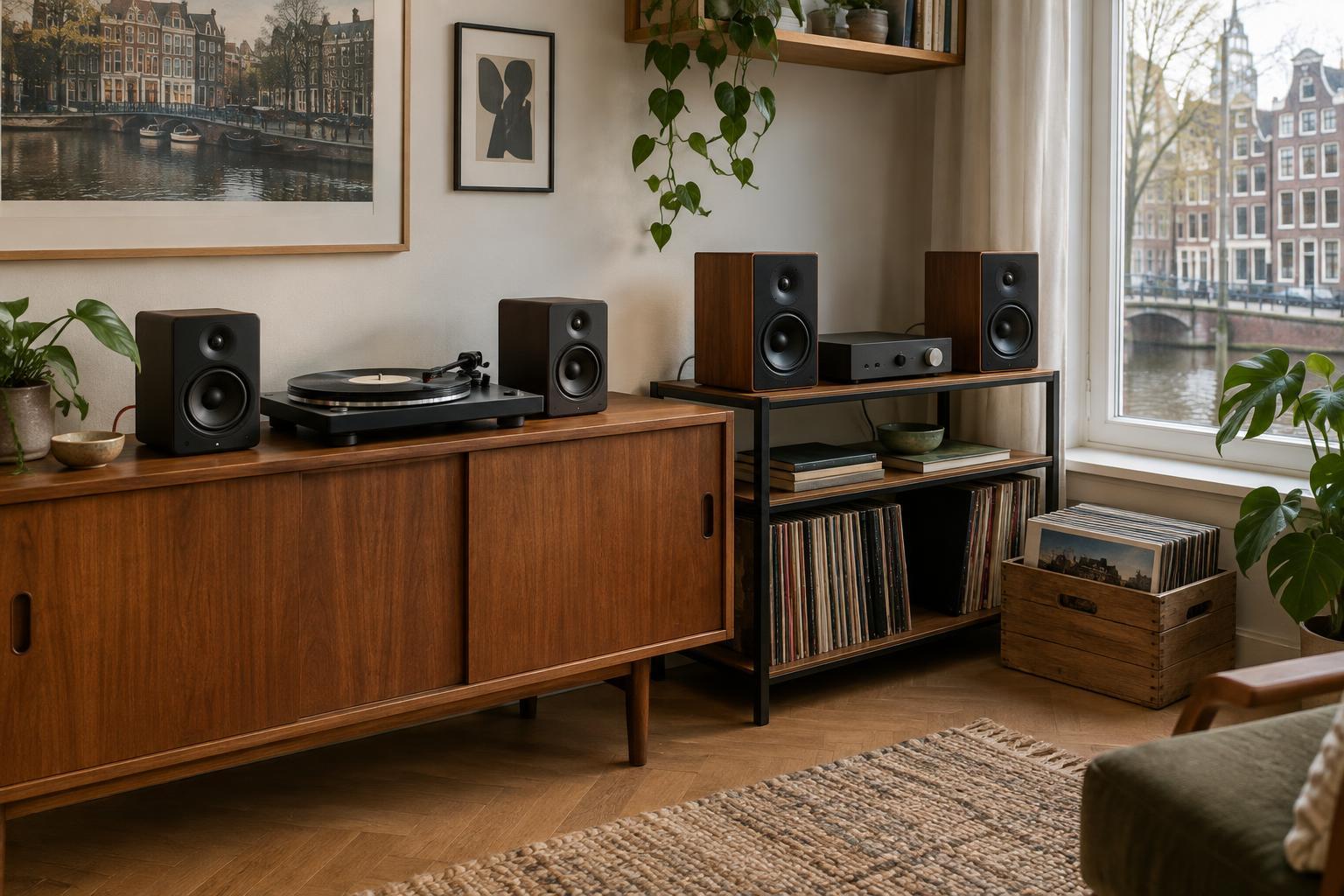
Powered speakers contain amplification, so they do not need a separate stereo amplifier to drive them. A straightforward chain is turntable with phono preamp to powered speakers. If the turntable has no phono preamp, place an external one between the turntable and the speakers, unless the speakers specifically include a phono input. Some powered speakers also offer volume control, multiple inputs or wireless playback; these features vary by model.
This approach can suit a desk, a small living room or anyone who wants fewer components and cables. It can also make it simpler to begin listening without choosing a separate amplifier. Check how the pair connects internally, though. Some sets need a cable between the two speakers, and the speaker with the controls may need to sit near a power outlet. Think about where both speakers will stand before deciding that a compact system will be easy to place.
Powered does not mean automatically better or worse sound. Speaker design, room placement and the quality of the recording all matter. It does mean that the amplification is chosen as part of the speaker system, which is convenient but usually gives you less freedom to swap amplifiers later.
What passive speakers leave open
Passive speakers require an external amplifier or receiver. A typical chain is turntable to phono preamp to amplifier to passive speakers. An amplifier with a suitable phono input can fill the phono-preamp role as well; otherwise, use a turntable with a line output or add a separate phono preamp. The amplifier connects to the speakers with speaker wire, not the same interconnects used for a line-level input.
The extra component takes up space, but it can make a system more adaptable. You may be able to change the speakers while keeping the amplifier, or change the amplifier without replacing the speakers. A receiver or integrated amplifier may also give you useful inputs for other sources. If you are building a listening setup gradually, that flexibility can be appealing.
There is some matching to do. Check that the amplifier is intended for the speakers’ stated impedance and that it provides a practical amount of power for your room and listening level. Avoid treating a single power figure as a guarantee of sound quality. When buying used equipment, inspect connections and controls, and confirm what the unit actually includes: an input labelled AUX is not a phono input.
Choose around your room and habits
Begin with an inventory rather than a shopping list. Does your turntable have a built-in phono preamp? Do you already own a working amplifier? How many other sources do you want to connect? Where are the outlets, and where can the speakers sit? Those answers often narrow the choice faster than comparing specifications.
Give either type of speaker room to work. Aim for a stable surface or stand, with the left and right speakers separated rather than pressed together beside the turntable. Try to keep the turntable away from speaker vibration, especially at higher volumes, since vibration can feed back through the stylus. Small changes in position can be worth trying before replacing equipment.
For a simple first system with limited space, powered speakers can be a sensible choice. If you already have an amplifier or enjoy changing components over time, passive speakers may fit better. Neither path is a final commitment to a particular way of collecting or listening: the useful system is the one you can connect correctly, place comfortably and enjoy using record after record.