Three terms, three different questions
A sleeve stamped “promo,” a record with a blank label and a test pressing can all look like unusual versions of a familiar release. They are not interchangeable terms, though. A promo copy is generally a record supplied to help publicise music. “White label” describes a record whose label carries little or no identifying information. A test pressing is a small-run copy made so a release can be checked before wider manufacture.
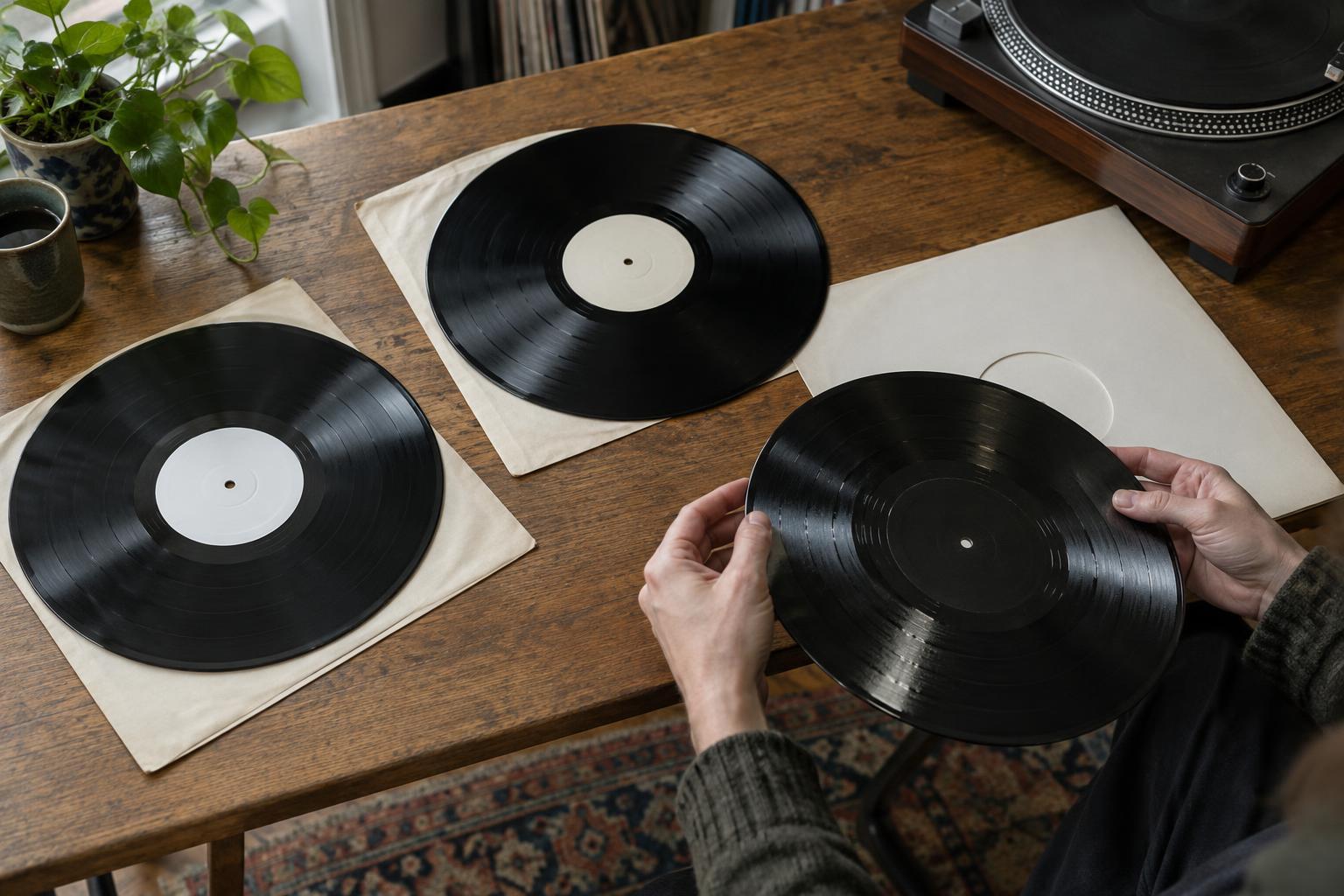
Those definitions can overlap. A promotional record might have a plain white label; a test pressing might have one too. The important question is not simply whether a copy looks scarce. It is what stage of production it came from, why it was made and how confidently you can identify the music on it.
Promo copies: made to get music heard
Promotional copies are intended for people who might play, review, stock or otherwise introduce a record to listeners. Their presentation varies. Some closely resemble retail copies but have a sticker, stamp or printed notice marking them as promotional. Others have different artwork, a simpler sleeve or a track selection prepared for promotion. A promo marking tells you something about the copy’s intended use, not necessarily that its audio differs from the standard release.
When assessing one, compare what is actually in front of you: track listing, catalogue number, label design and any information etched or stamped into the runout area near the centre label. A sticker on a sleeve is a useful clue, but sleeves and records can become separated over time. Condition matters too. A copy sent out for airplay may have been handled heavily even if its packaging looks distinctive.
White labels: a description, not a guarantee
A white label is usually recognised by its plain, minimally printed or handwritten centre label. That appearance can serve different purposes. It may keep a forthcoming release low-profile, allow a track to circulate before final packaging is ready, or simply reflect a limited, utilitarian pressing. In dance music collecting, the term often suggests a record circulated among DJs, but the label colour alone cannot tell you who made it or how many copies exist.
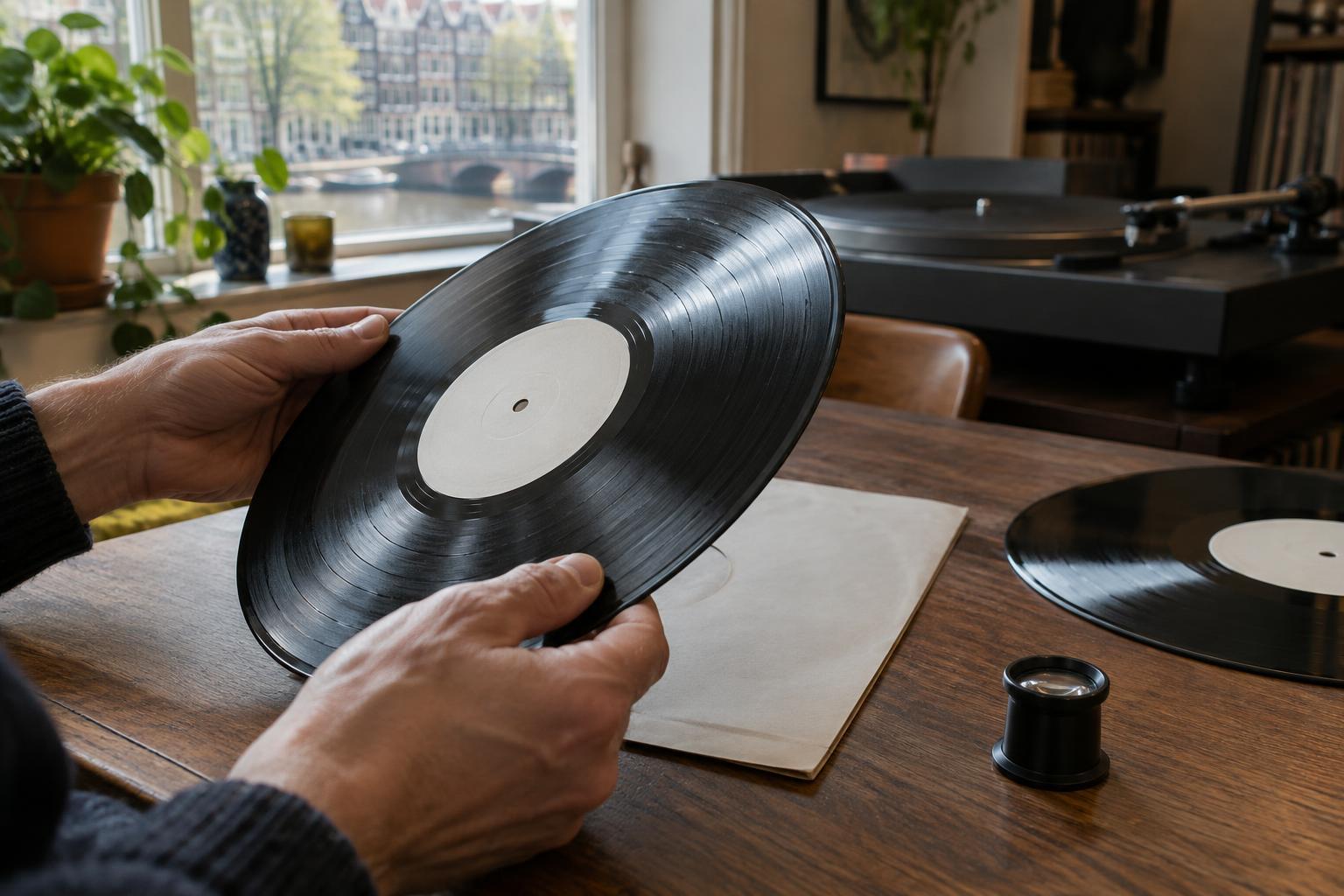
Some white labels contain familiar music; others have alternative mixes or uncertain titles. Handwriting can help identify a copy, but it is not conclusive by itself. Look for consistent runout markings, compare the number and length of tracks, and ask a seller how they identified the record. If the sleeve has a title but the disc has no matching details, treat that title as a lead to check rather than settled fact.
Test pressings: a production check
A test pressing is typically made before the main run so the sound and physical pressing can be evaluated. It gives the people preparing a release a chance to catch problems before more copies are made. Test pressings often arrive in plain sleeves with generic labels or handwritten details, although their appearance varies. Because a test pressing belongs to a production process, identifying it depends on more than finding a blank label.
A genuine test pressing may sound like the finished record, but it should not automatically be treated as the definitive version. Changes can occur before release, and an individual test copy can have its own playback flaws. If you hope to hear a particular mix, check the audio where possible rather than relying on the words “test pressing” in a listing. Runout information, credible accompanying paperwork and a clear account of where the copy came from can strengthen an identification, but any one clue may leave questions.
How to buy with curiosity rather than assumptions
Start with the reason you want the record. If you want a dependable listening copy, playback condition and the correct music may matter more than production history. If you collect a particular artist or release, the exact variant becomes more important. In either case, inspect both sides, read every label and sleeve detail, and note the runout markings. Ask about scratches, noise and warping, especially when a plain sleeve offers little protection.
When crate-digging in Amsterdam or elsewhere, it is reasonable to ask what supports an unusual description and whether you can inspect or hear the copy under the seller’s rules. Handle it by the edges, return it to its sleeve carefully, and leave uncertain records in the condition you found them. A modestly labelled copy with clear evidence can be more satisfying than a dramatic claim with little to back it up. Promo copy, white label and test pressing are useful starting points; the record itself still deserves a closer look.