Start with what you can see—and hear
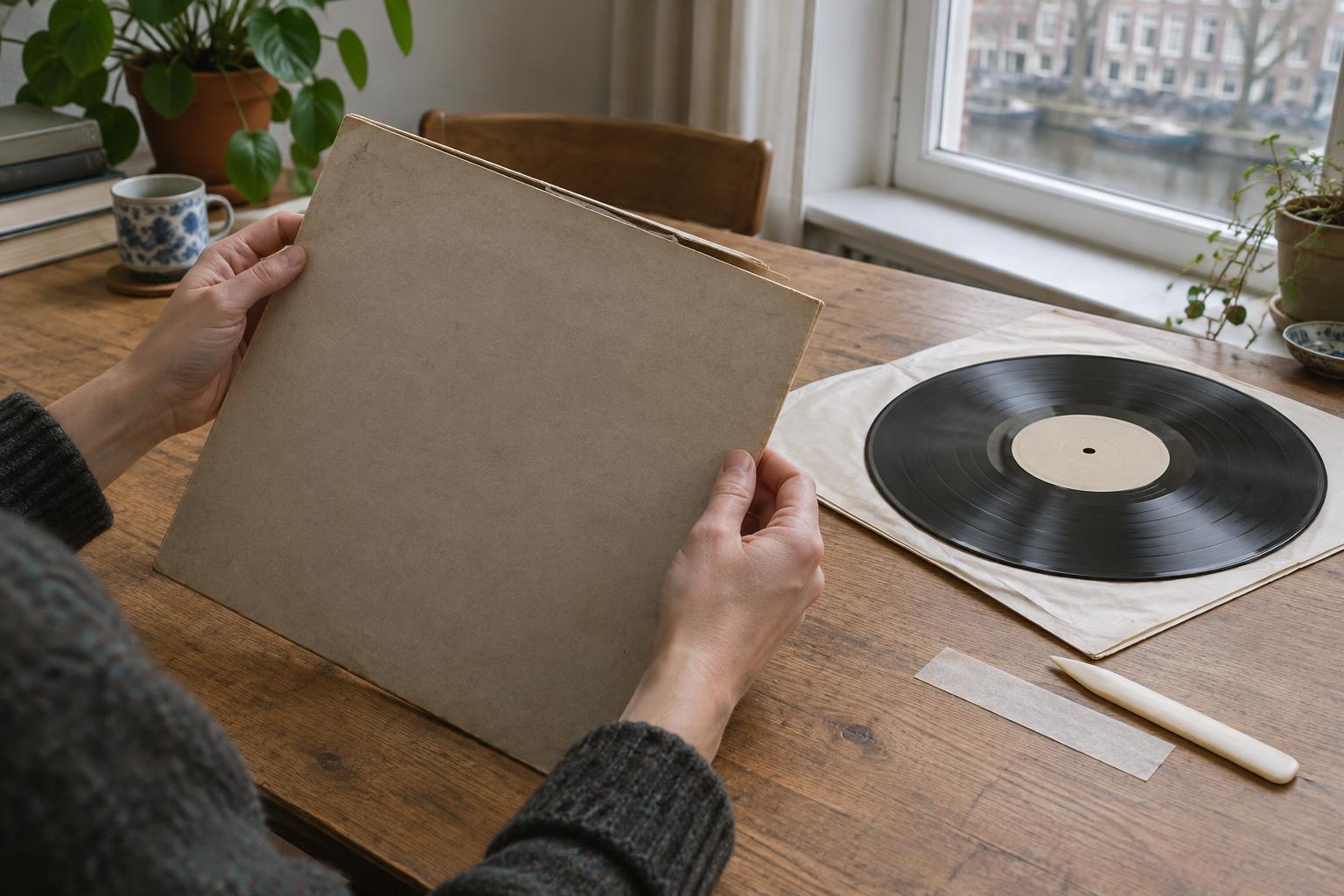
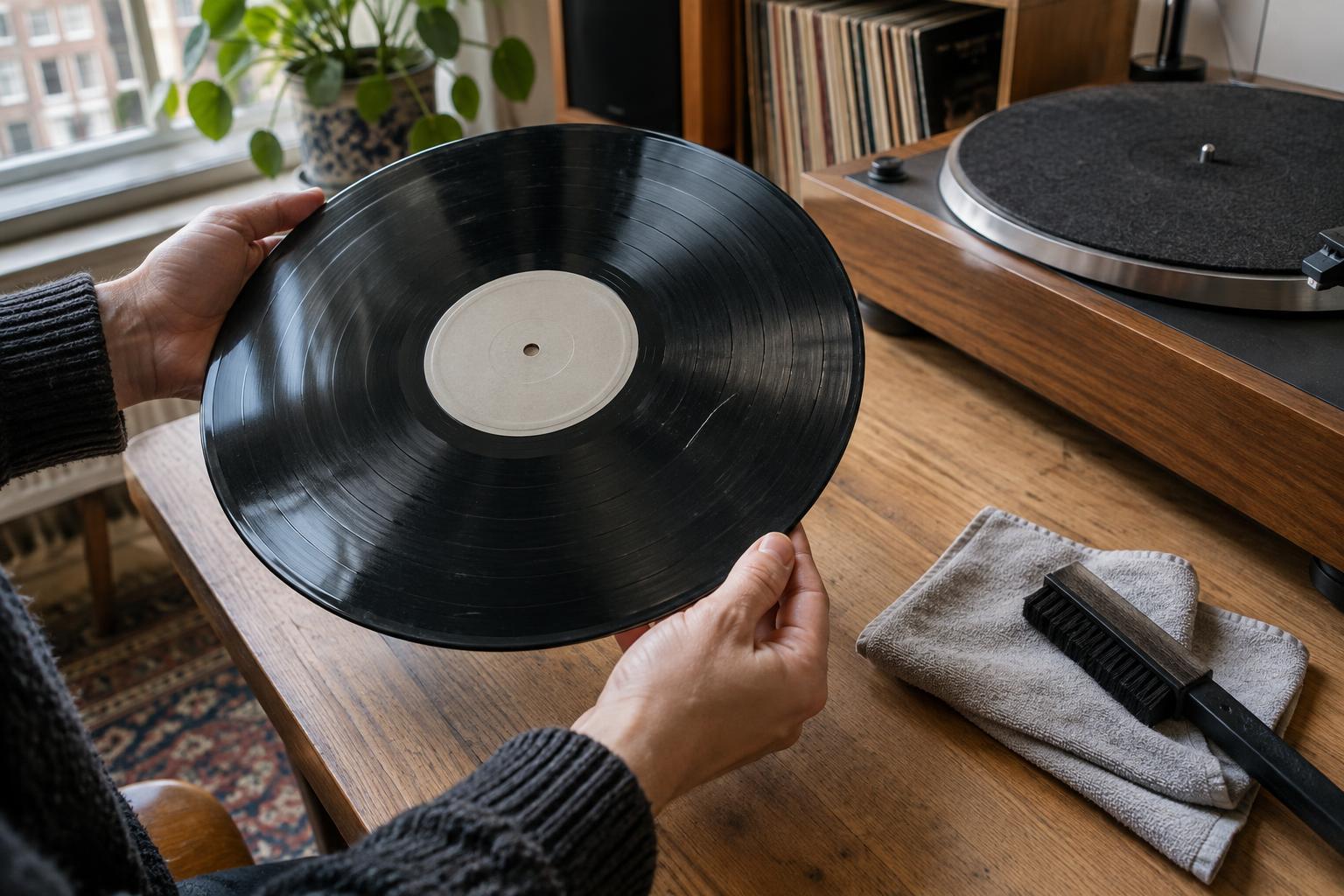
Pull a record from its sleeve and a faint mark catches the light. Is it a harmless scuff or the reason a song clicks? Appearance alone cannot always tell you. A record can look worn and play quietly, while a small mark in the wrong place may be audible on every rotation.
A scuff is often a shallow surface mark caused by contact with a sleeve or another object. It may sit above the part of the groove traced by the stylus and have little effect on playback. A scratch can cut across or disturb the groove itself. Depending on its location and depth, it may cause a repeated tick, distortion, a skip or no obvious problem at all. Cleaning can remove material on the record; it cannot put displaced vinyl back into shape.
What cleaning may improve
Dust, fingerprints and dried residue can collect on a record that also happens to be scuffed. Removing that contamination may reduce crackle or reveal that an apparent scratch was partly a line of dirt. A dry carbon-fibre brush can help with loose surface dust before playback. For stubborn grime, a record-cleaning method designed for vinyl, used according to its instructions, may be more effective than repeated dry brushing.
Cleaning can also make an inspection more useful. Under steady, angled light, it is easier to see whether a mark remains after loose debris is gone. If the same passage sounded noisy before cleaning, play it again only once the record is fully dry. An improvement suggests that dirt was contributing to the noise; it does not mean a physical scratch has been repaired. Keep expectations modest, particularly with second-hand records whose cleaning history is unknown.
What cleaning cannot repair
If a groove wall has been cut, crushed or worn, washing will not restore its original shape. A deep scratch crossing several grooves may produce a rhythmic click as the stylus reaches it on each turn. If the stylus jumps out of the groove or repeats a passage, that is a playback problem, not a stain to scrub away. Nor will cleaning undo damage from a worn stylus or poor handling in the past.
Be wary of fixes that promise to polish out scratches. Aggressive rubbing, abrasives and household solvents can damage the playing surface or leave residue behind. A dramatic-looking scuff that plays well is usually safer to leave alone than to treat as a restoration project. If a particular mark repeatedly causes a skip, note the affected passage and decide whether the record remains enjoyable as it is.
A cautious way to assess a marked record
First, hold the disc by its edge and label and look at the mark in good light. Avoid dragging a finger across it: skin oils add contamination, and touch will not reliably tell you whether the groove is damaged. Remove loose dust gently. If you use a wet-cleaning process, choose supplies intended for records, follow the product guidance and allow the disc to dry completely before returning it to a sleeve or turntable.
Then listen at a comfortable volume, paying attention to whether a noise repeats at the same point on successive rotations. If the record skips, stop playback rather than repeatedly forcing the stylus through the passage. Check that the stylus is clean and that the turntable is set up properly before blaming every sound on the visible mark. Incorrect tracking or a dirty stylus can complicate the diagnosis, though neither should be treated as a reason to ignore an obvious deep scratch.
Prevent the next mark
Care is easier than repair. Return records to clean inner sleeves after listening, keep sleeves free of grit and store discs upright rather than stacked. Handle a record over a clear surface so a slip is less likely to send it onto something hard. Brush away loose dust with a light touch instead of pressing debris into the grooves.
For collectors, the useful question is not simply whether a record looks perfect. It is whether its condition affects the listening experience, and whether a gentle cleaning is likely to help. Treat visible marks as clues, listen carefully, and stop where cleaning stops: dirt can be removed, but damaged grooves cannot be washed back into place.