Aim for a stable room, not a perfect number
A good place to store records usually feels comfortable for people: neither hot and stuffy nor cold and damp. Consistency matters as much as any reading on a thermometer. A collection kept in a living room with modest seasonal changes is generally better placed than one exposed to intense afternoon sun or repeated swings between a hot day and a cold night.
Temperature and humidity affect different parts of a record collection. Excessive heat can soften a vinyl disc enough to increase the risk of warping, particularly if it is leaning or under pressure. Damp air is more likely to trouble paper sleeves and jackets, encouraging musty smells, staining or mold. Dry air is usually less threatening to the disc itself, though it can make static more noticeable during handling and playback.
Keep records away from heat and direct light
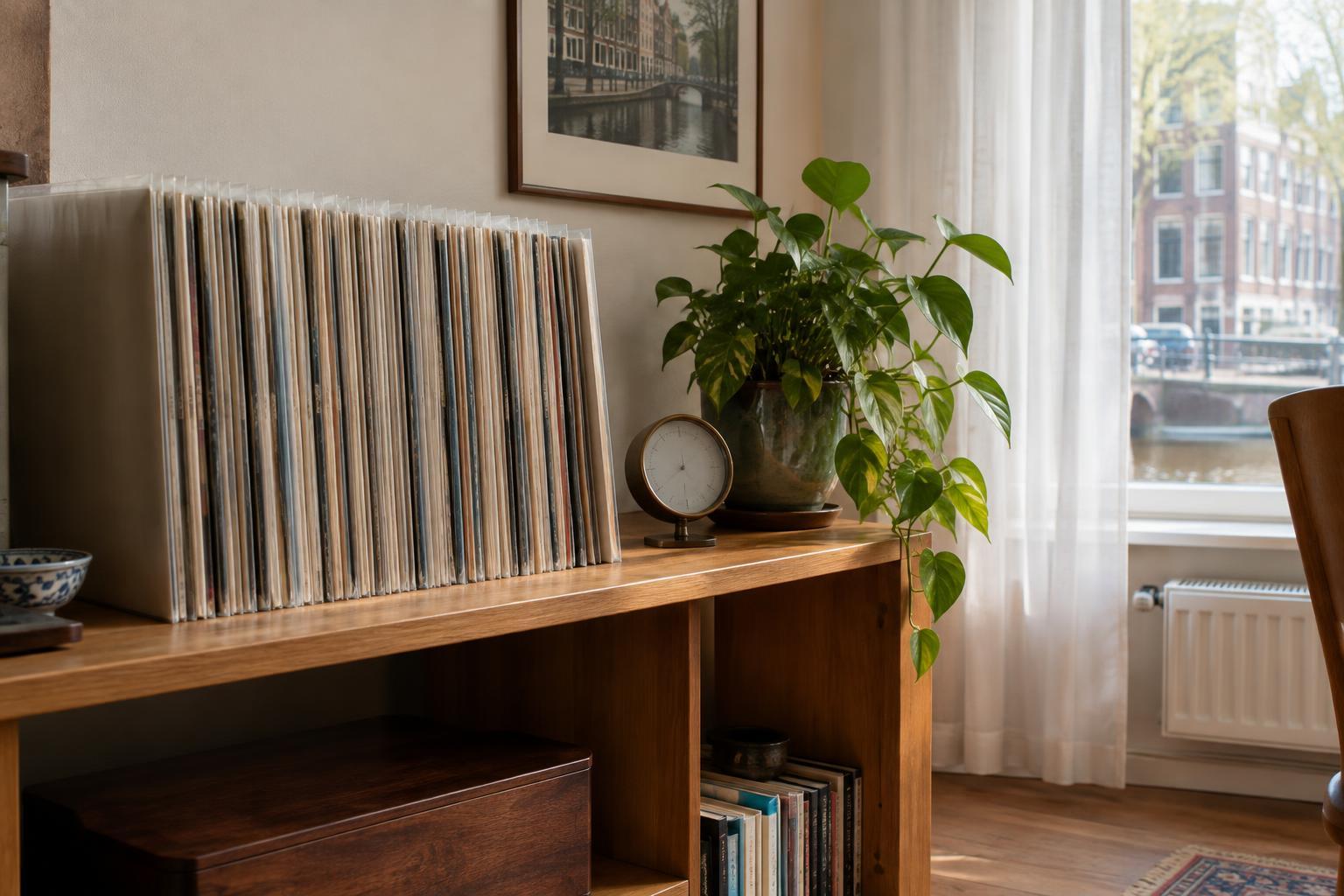
Choose shelving away from sunny windows, radiators, heating pipes and appliances that give off warmth. Sunlight can heat one side of a jacket while the rest of the room feels cool, so a comfortable room temperature does not guarantee that a shelf beside a window is safe. A shaded interior wall is often a simpler choice.
Avoid using a car, attic or uninsulated storage space for long-term storage. Such places can become much hotter or colder than the rooms you use every day, and the changes may be hard to notice until damage has occurred. If records must spend time in an unfamiliar space, check the conditions there first rather than assuming that a closed box provides protection from heat.
Watch humidity where the records actually sit
Humidity is the amount of moisture in the air, commonly shown as relative humidity. For home storage, the useful goal is a moderate level without persistent dampness or sharp fluctuations. A small hygrometer on or near the record shelf can help you spot a pattern. Treat its reading as a guide to the space, not a guarantee that every corner of a room has identical conditions.
Basements, exterior walls and shelves close to a bathroom or poorly ventilated kitchen deserve extra attention. Feel for dampness, look for condensation and check jackets for a musty smell. Leave a little space between the collection and a wall that tends to feel cold or damp. If a room regularly feels humid, improving ventilation or using a suitable dehumidifier may help; address any leak before relying on storage accessories to protect the records.
Let shelves and sleeves support good storage
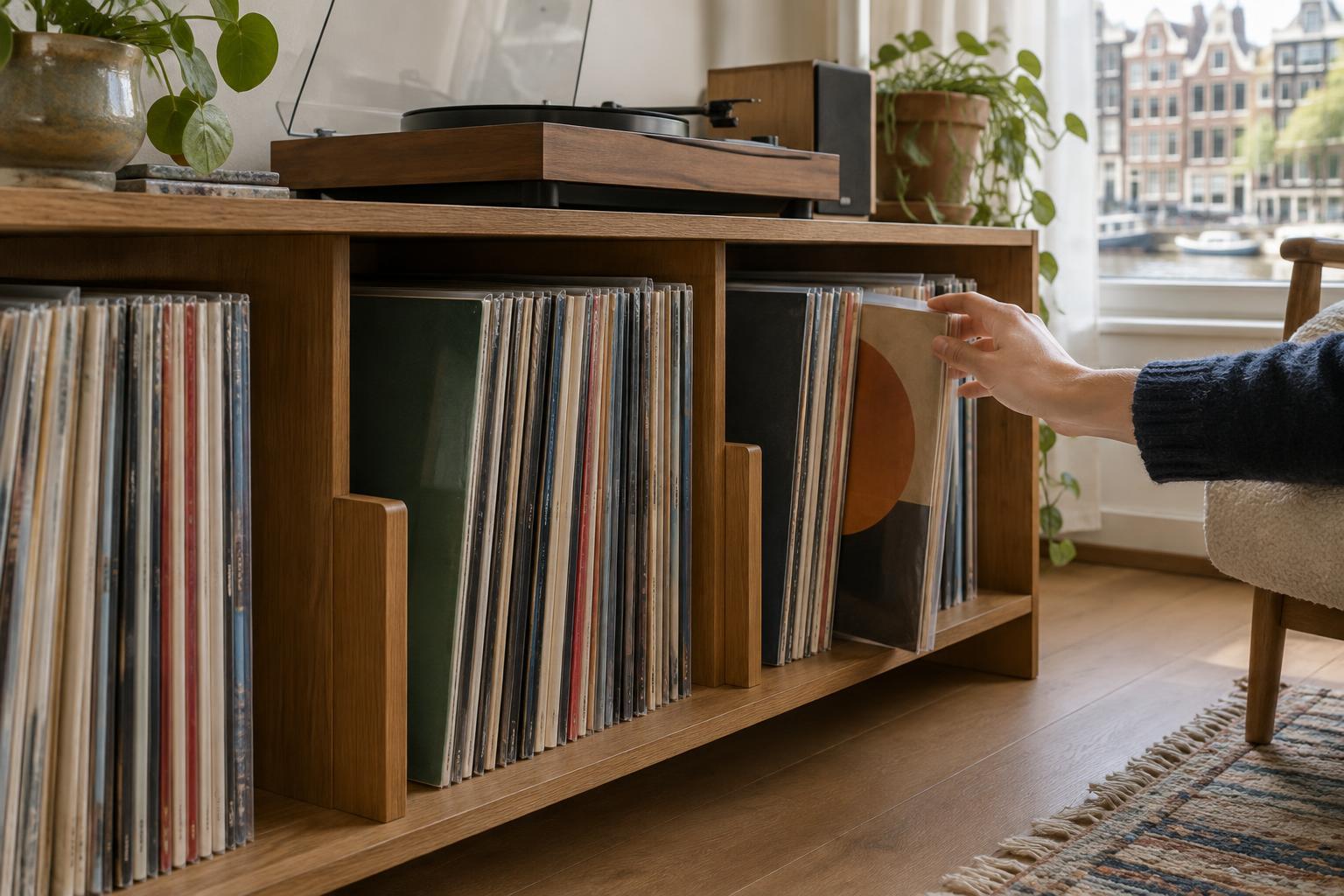
Store LPs upright with enough support to keep them from leaning heavily, but do not pack them so tightly that removing one puts strain on its neighbors. This reduces pressure on discs and jackets, especially if the room occasionally gets warmer. Keep records off the floor, where spills and localized dampness are easier to miss.
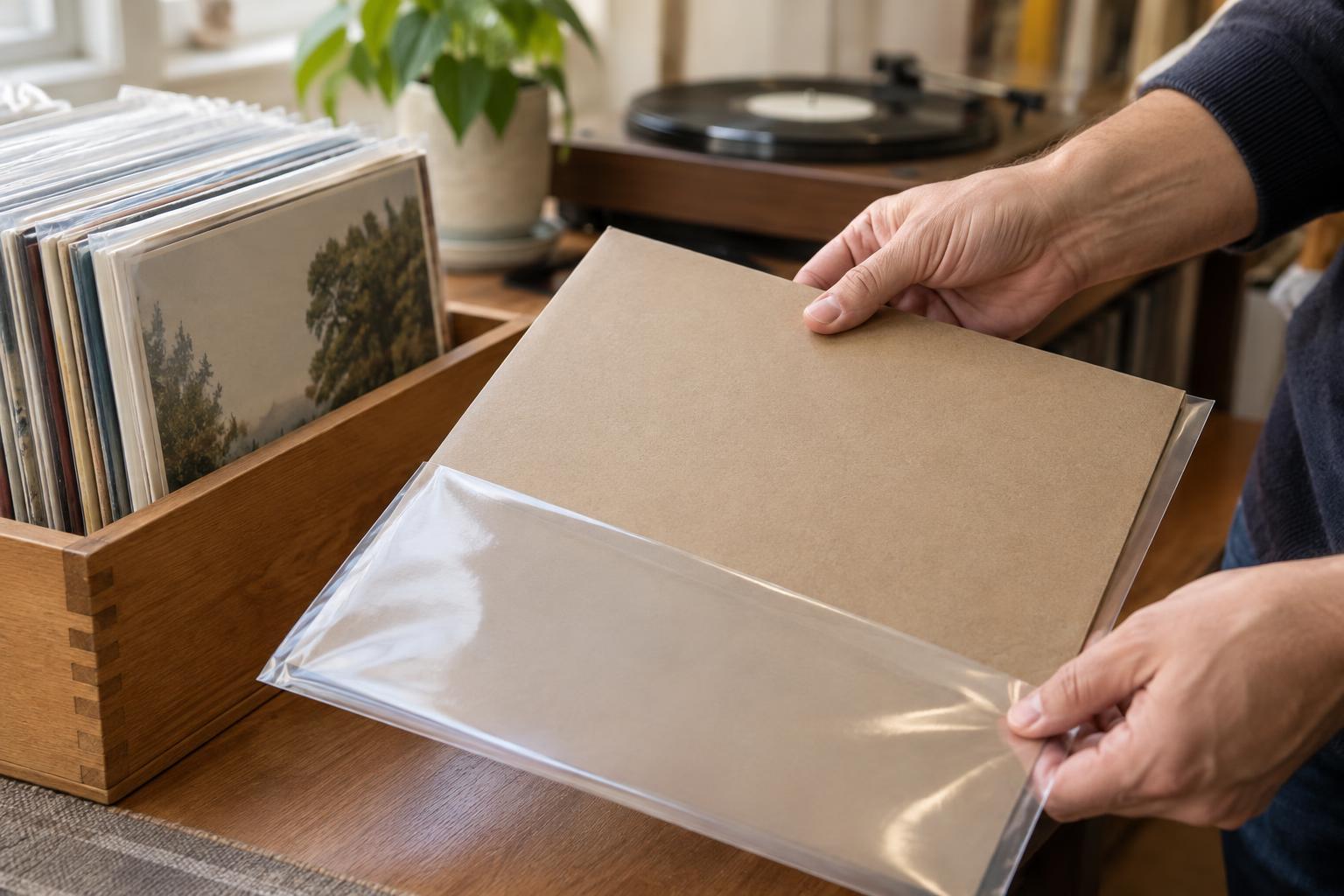
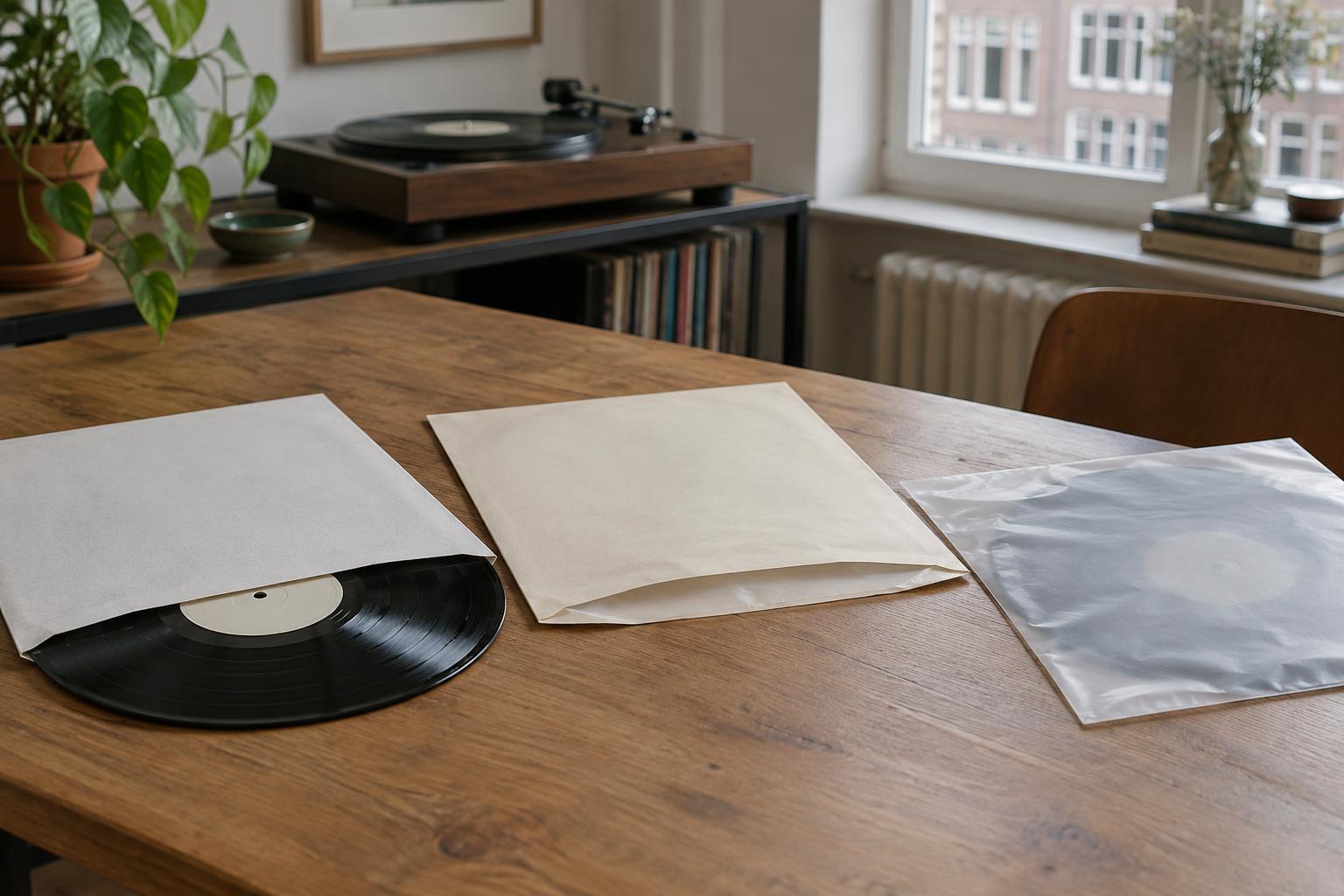
Clean inner sleeves and protective outer sleeves help shield records and artwork from dust and handling. They do not make a collection waterproof or cancel out a poor storage location. If a jacket has become damp, separate it from the rest of the collection while you assess and dry it in a well-ventilated place. Avoid sealing visibly damp items in plastic, which can trap moisture against the paper.
Make a simple seasonal check a habit
You do not need to monitor a collection constantly. Check the shelf when the weather changes, when heating is switched on, or after moving furniture. Look for sunlight reaching the records at a new angle, a radiator warming nearby shelves, or condensation appearing on a window or wall. If you use a hygrometer, occasional readings taken at different times will tell you more than one isolated number.
If you move records from a cold or damp place into a warmer room, give them time to settle before opening tightly packed boxes or playing them. Check for moisture on packaging and inspect any affected sleeves. The basic approach is straightforward: choose a stable indoor spot, keep heat and dampness away, and revisit the setup when the room changes.