Why a tonearm needs anti-skate
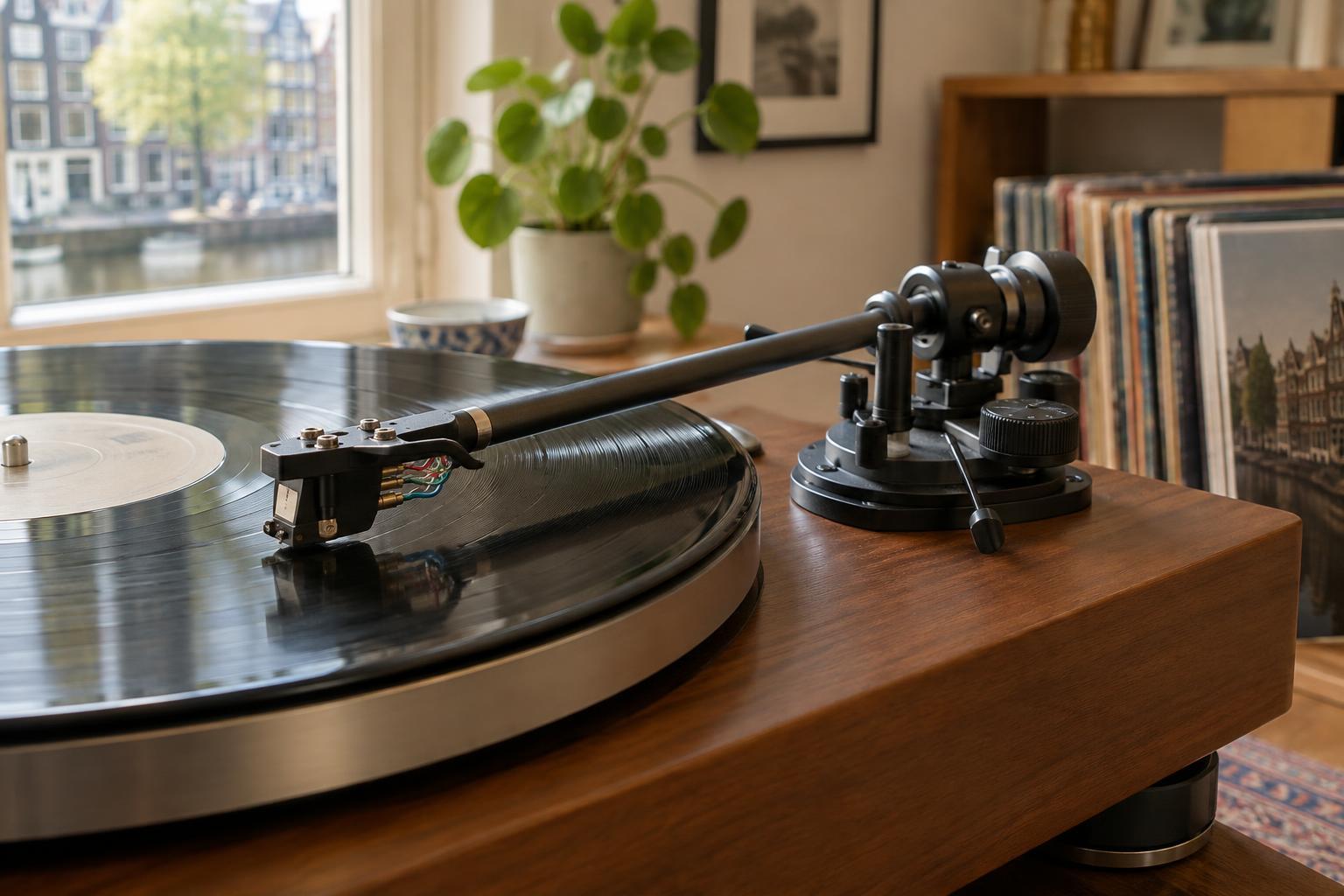
As a record spins, the stylus encounters friction in the groove. On a typical pivoted tonearm, the arm’s shape and geometry turn part of that force into a pull toward the centre of the record. This is called skating force. Anti-skate applies a small force in the opposite direction, usually through a spring, magnet or hanging weight.
The aim is not to keep the arm perfectly still. During playback, the stylus should follow the groove inward. Anti-skate is there to reduce an unwanted sideways bias so the stylus can track both groove walls more evenly. A setting that is far too low or too high may contribute to distortion, uneven tracking or unnecessary wear, but anti-skate is only one part of a well-set-up turntable.
Set the basics before touching the dial
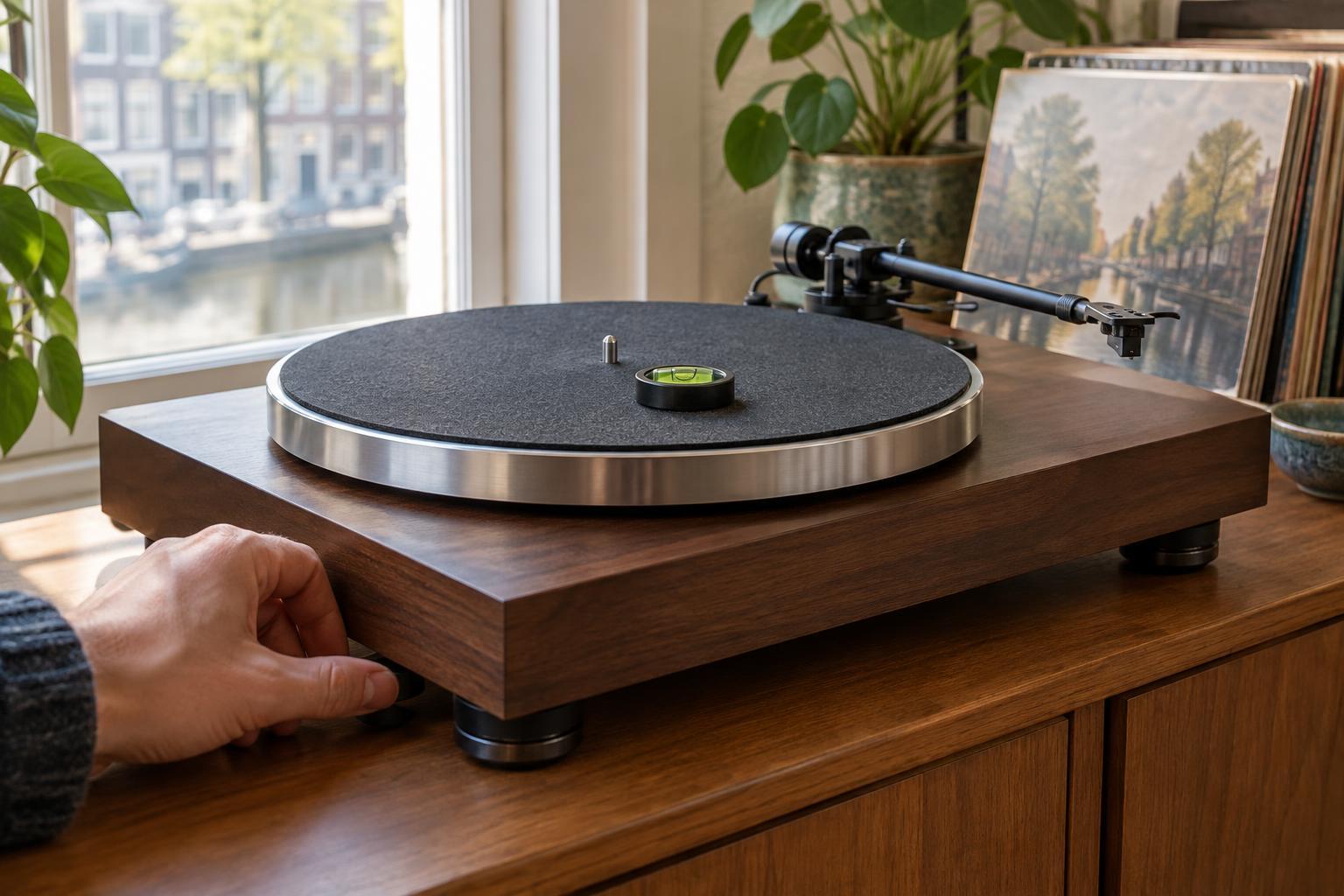
Start with the turntable on a stable, level surface. Check that the stylus is clean and the cartridge is securely fitted. If you have installed or moved the cartridge, confirm its alignment using the turntable maker’s instructions or a suitable alignment guide. Anti-skate cannot correct a cartridge that is mounted at the wrong angle.
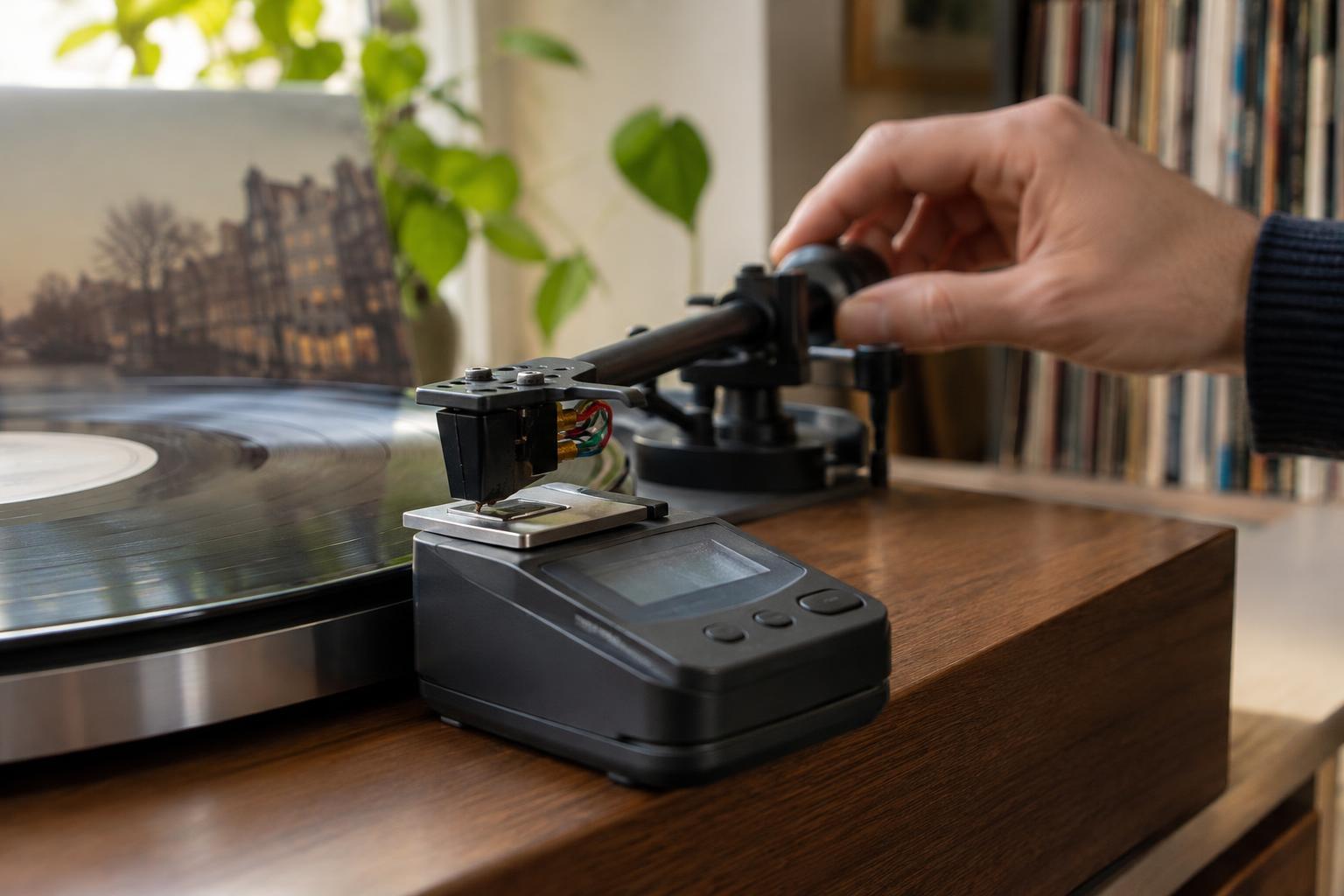
Set the vertical tracking force before adjusting anti-skate. Use the range recommended for your cartridge, following its instructions and your tonearm’s balancing procedure. A stylus-pressure gauge can help if the arm’s counterweight markings are difficult to read. Do not reduce tracking force below the recommended range in an attempt to be gentler on records: reliable tracking matters more than an unusually light setting.
Choose a sensible starting setting
If your tonearm has a numbered anti-skate dial, its manual may suggest matching the number to your tracking force in grams. For example, a tracking force of 2 grams often points to an anti-skate setting near 2 as a starting point. The markings are guides, not precision measurements, and designs vary. Follow the tonearm maker’s method when it differs.
Some arms use a small weight suspended by a thread, with different notches for different amounts of compensation. Others have no user-adjustable anti-skate control. In each case, identify the intended adjustment method before changing anything. Make one small change at a time and note your starting position so you can return to it.
Listen, then adjust cautiously
Play a clean, familiar record in good condition. Listen for persistent distortion in one channel, particularly on demanding passages or nearer the end of a side, where tracking can be more challenging. If you hear a problem, first rule out a dirty stylus, damaged record, incorrect tracking force or cartridge misalignment. A channel-specific problem does not, by itself, prove that anti-skate is wrong.
If those basics check out, try a modest anti-skate adjustment and listen again at a comfortable volume. The goal is stable, balanced playback rather than an exact number on the dial. Avoid large changes based on a single record: groove condition and the music itself can affect what you hear. A properly used test record may offer another check, but its instructions matter, and an extreme test track need not dictate your everyday setting.
What anti-skate tests can and cannot show
You may see advice to lower the stylus onto an ungrooved part of a spinning disc and adjust anti-skate until the arm stops moving. That looks straightforward, but a smooth surface does not behave like a modulated groove holding a stylus between two walls. Treat such a test with caution rather than using it as the final answer. Likewise, an arm drifting while it is raised and the turntable is stopped may reflect how it was balanced or how the mechanism behaves, not how the stylus tracks a record.
Anti-skate is a compromise because skating force is not identical at every point on every record. For most listeners, the practical approach is simple: establish the correct tracking force and alignment, use the maker’s suggested anti-skate starting point, then make only small adjustments if repeatable playback symptoms justify them. Once your records play cleanly, leave the control alone and enjoy listening.