A sound, not a checklist
Psychedelic rock is easiest to recognize by what it does to the listener’s sense of space and time. A guitar seems to hover rather than drive forward. A short passage repeats until it feels hypnotic. Voices drift through echo, or a song changes direction when you expect another chorus. These choices can make an ordinary rock lineup sound unfamiliar, expansive or dreamlike.
There is no single instrument or effect that turns a record psychedelic. The style overlaps with garage rock, folk, blues, progressive rock and other forms of experimental music. A track may be loud and ragged or soft and delicate. Instead of looking for one defining feature, listen for several musical choices working together to unsettle a straightforward song.
Guitars that bend the edges of a song
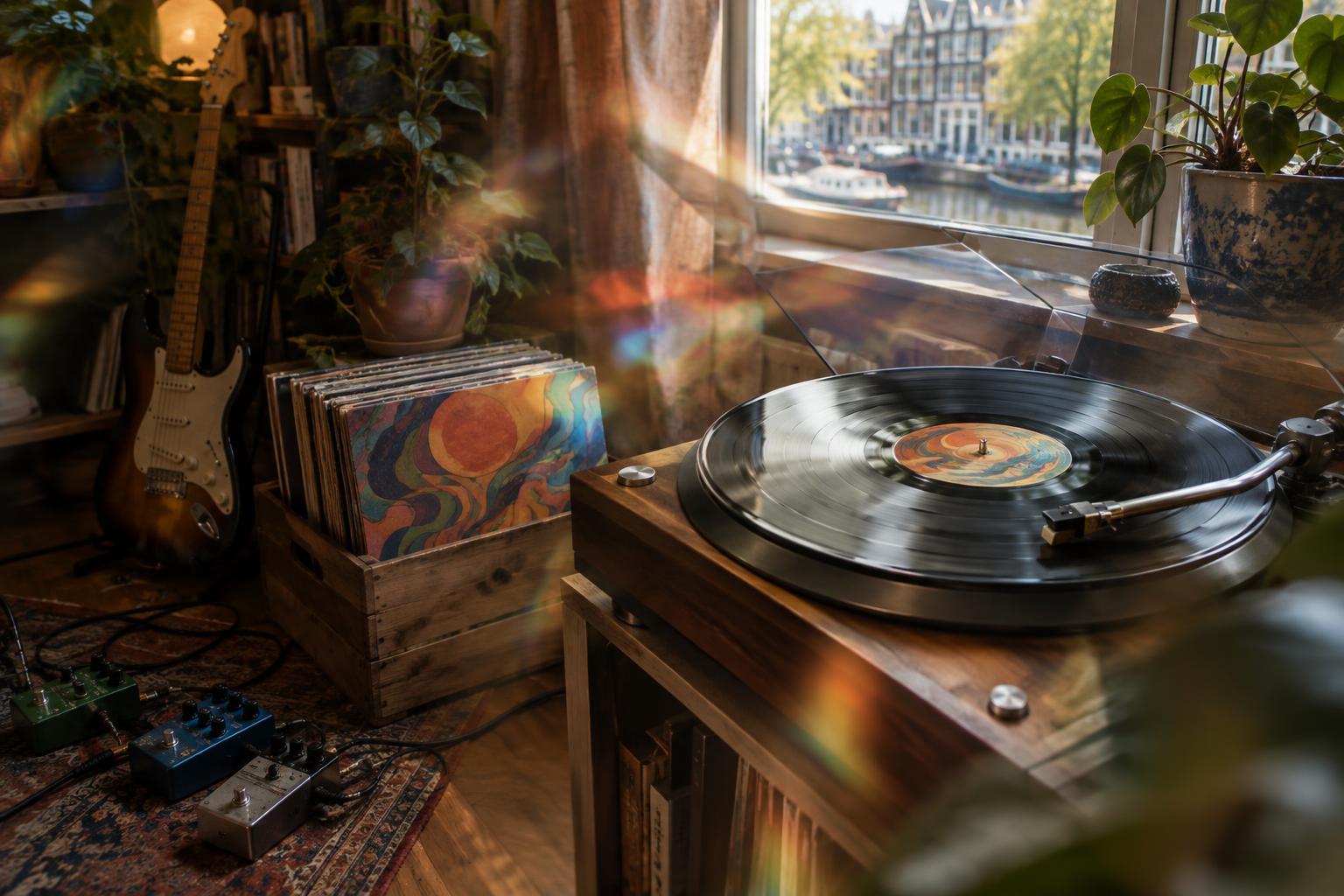
Electric guitar is often the first clue. Fuzz can make a riff sound rough and saturated; wah-wah can give notes a vocal-like movement; tremolo can make a sustained chord pulse. Delay and reverb leave a trail behind the original sound. More important than the name of an effect is how it changes the guitar’s role: it may create an atmosphere, answer the singer or turn a simple phrase into something that seems to circle endlessly.
Psychedelic texture does not depend on electric guitar alone. An organ can hold a wavering backdrop while the band plays around it. Acoustic strings, drones or unusual percussion can pull a rock arrangement away from its usual shape. Sometimes the decisive detail is restraint: a single ringing note set against a busy rhythm section can feel stranger than a densely layered solo.
Studio space and shifting perspectives
On many psychedelic records, the recording process is part of the composition. Sounds may enter from one side, recede into the background or return in a changed form. Layered vocals, tape manipulation, reversed sounds and abrupt edits can make a track feel less like a performance in one room and more like a constructed environment. Not every psychedelic record uses elaborate production, but attentive use of space is a common hallmark.
Vinyl listening can draw your attention to these decisions. On a familiar track, follow just one element—the bass, a background voice or a recurring noise—and notice where it sits in the mix. Headphones may reveal quiet layers, while speakers can make the relationship between instruments easier to feel. The point is not to find a supposedly correct setup, but to hear how the arrangement changes your perspective as the record plays.
Riffs, repetition and unexpected journeys
Psychedelic rock often stretches the usual verse-and-chorus pattern, though it does not have to abandon it. A band might linger on a groove, build intensity through repetition or leave room for a long instrumental passage. A steady bass figure can anchor a track while guitars and vocals grow increasingly unsettled. In other songs, sudden tempo changes or contrasting sections create the sensation of moving through different scenes.
Rhythm matters as much as effects. A loose, lurching beat can make a simple riff feel unstable; a firm, repeating pulse can make small changes unusually vivid. When crate-digging, a brief listening sample may reveal a texture but not a song’s full arc. If you can, give a promising track enough time to show whether it develops, doubles back or settles into a trance.
Lyrics, sleeves and the limits of labels
Lyrics may use surreal images, altered perspectives or questions about perception, but words alone do not determine the genre. Likewise, colorful sleeve art can signal an intended mood without telling you how the music sounds. A record with vivid artwork might play like conventional rock; a plain-looking sleeve might contain startling experiments. Treat packaging and descriptions as invitations to listen, not proof.
Genre labels are most useful when they help you find connections. A fuzzy, fast track may sit closer to garage rock; an extended, carefully arranged piece may lean toward progressive rock. Both can still have psychedelic qualities. Ask what the music does rather than whether it passes a test: Does it transform familiar sounds, invite immersion or make the passage of a song feel surprising? Those questions make a better guide through a record collection than any single pedal, instrument or sleeve design.