Start with the sleeve, but do not stop there
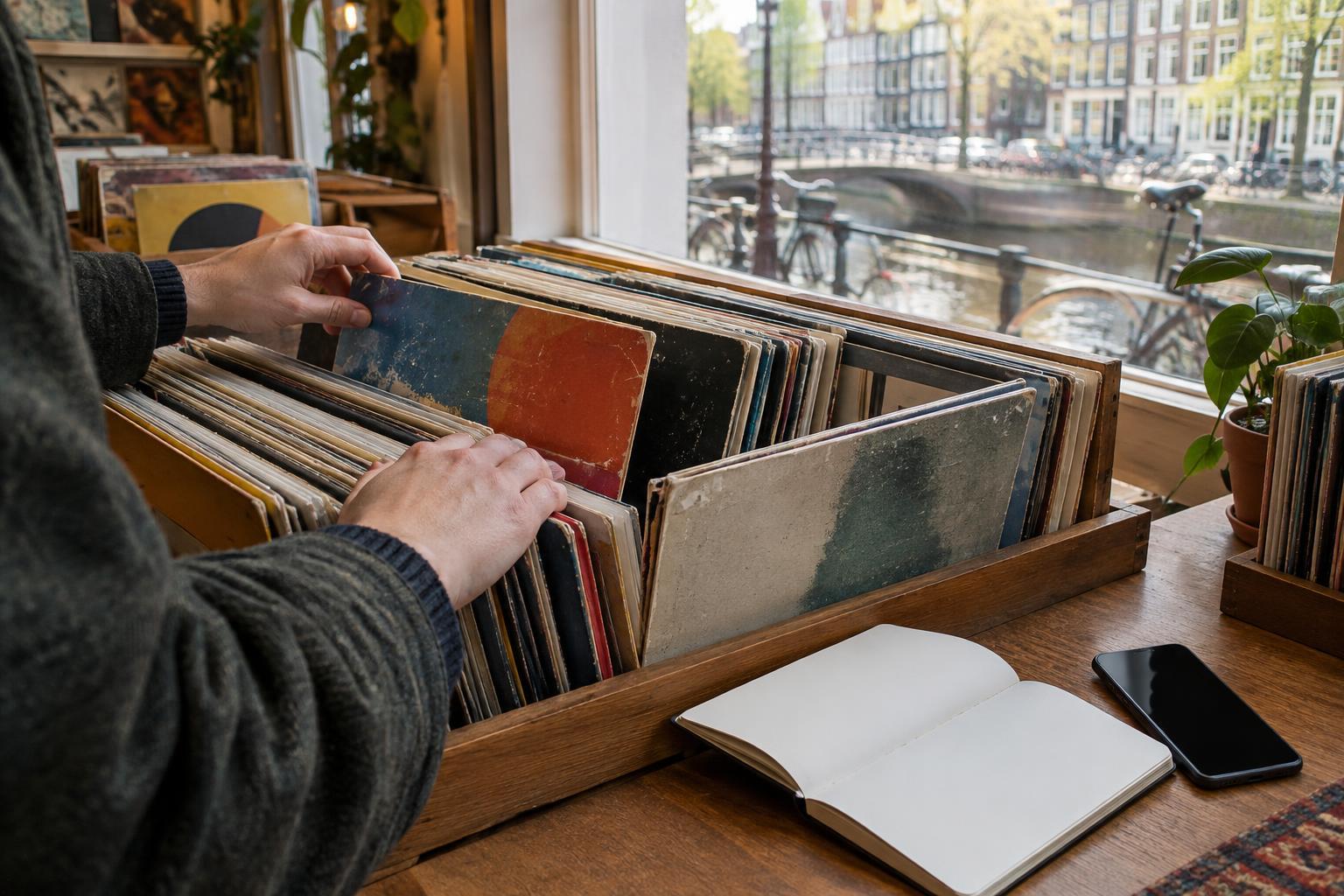
A sleeve gives useful clues about how a record has been stored and handled. Check the front and back for water marks, mould, heavy ring wear and writing. Look along the edges for seam splits, and make sure the record is in the correct outer sleeve. For albums with an inner sleeve, booklet or insert, check whether the parts you care about are present. Missing extras may not affect the music, but they can affect what you are willing to pay.
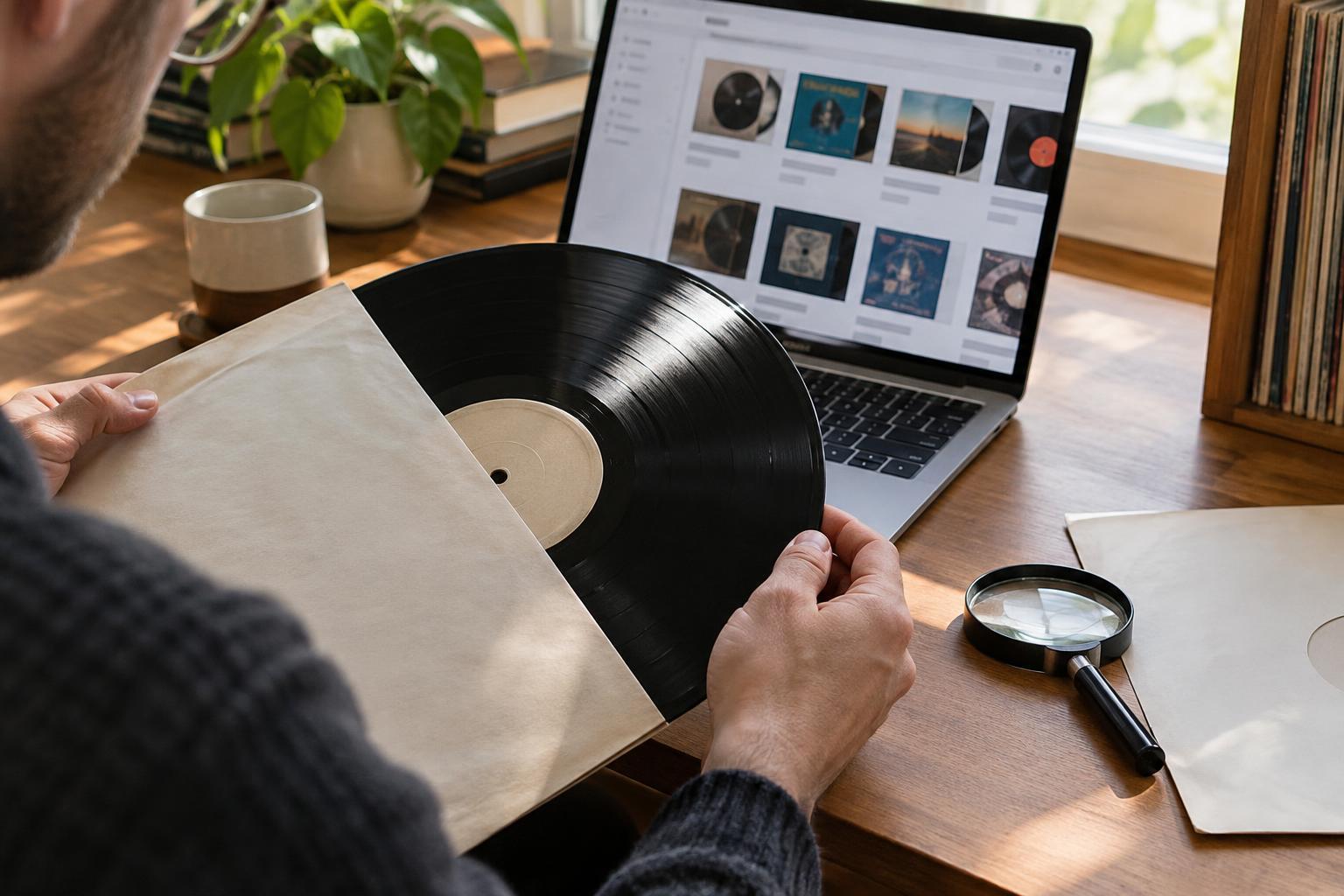
Slide the record out by holding the inner sleeve open rather than dragging the playing surface across its edge. If the shop has a preferred way to handle stock, follow it. A worn cover does not automatically mean a worn record, and a tidy cover does not guarantee quiet playback. Treat the packaging as one piece of evidence, then inspect the disc itself.
Inspect the vinyl under good light
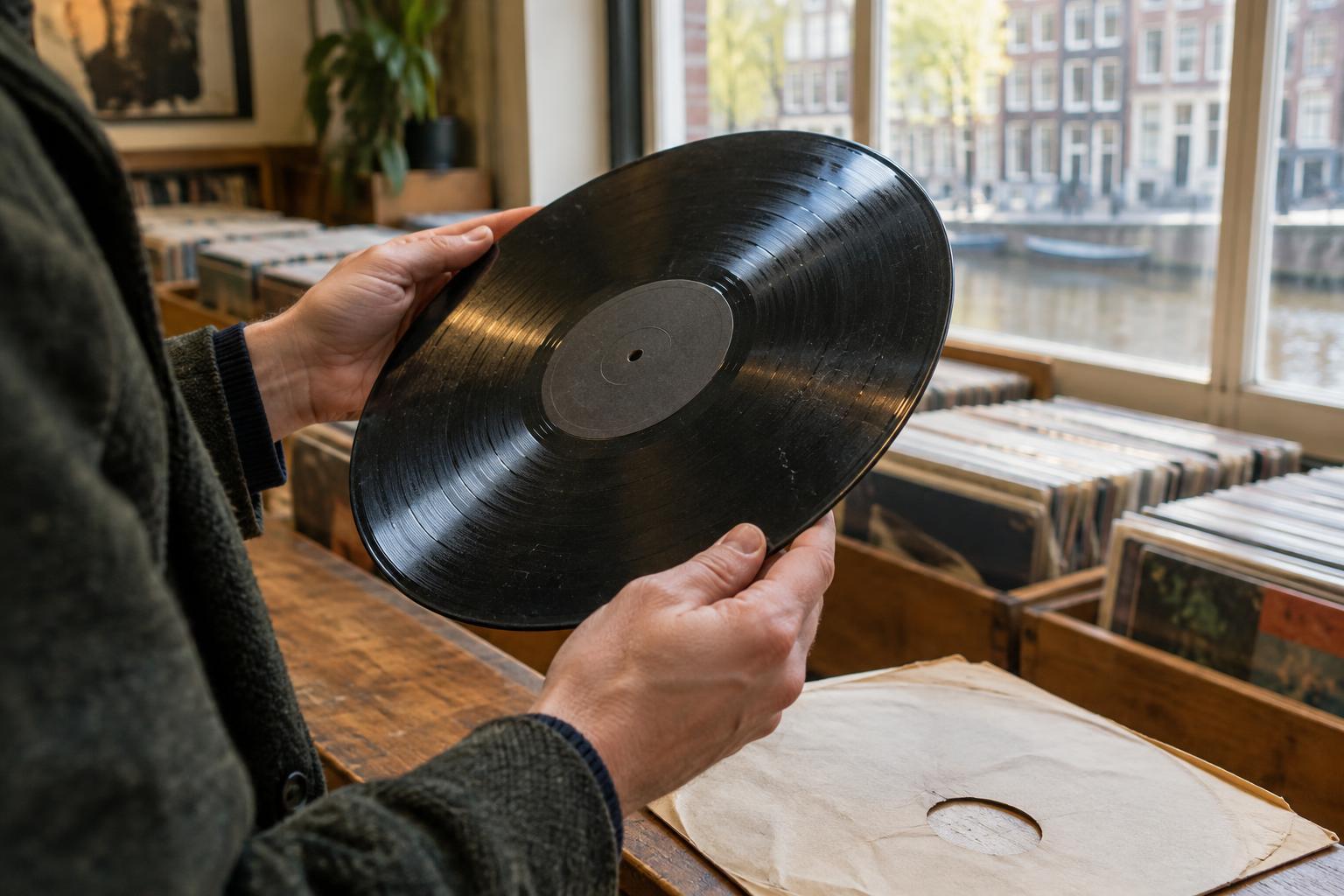
Hold the record by its edge and label, and tilt it under a bright, steady light. Turn each side slowly. Light sleeve scuffs often look different from sharp scratches: a scratch you can easily see or feel is more concerning, especially if it crosses several grooves. Dust and fingerprints may clean off, while damage pressed into the groove will not. Even a clean-looking record can have audible wear, so a visual check is a screening tool, not a promise of sound quality.
Look closely at the lead-in, where careless cueing can leave marks, and at any tracks you particularly want to hear. Check the label for tears, stickers or writing if presentation matters to you. A small amount of spindle wear around the centre hole can suggest repeated use, though it cannot tell you exactly how the record was played. Note anything you would want to ask about before you reach the counter.
Check for warps and other physical problems
View the record edge-on while gently rotating it. A slight rise or dip may play without trouble on some turntables, but a pronounced warp can make the tonearm move noticeably and may affect playback. Check that the disc lies reasonably flat if there is a safe, clean surface available. Do not place bare vinyl on a counter or another record without permission.
Inspect the edge for chips or cracks, particularly near the start of each side. Confirm that the record, label and sleeve all describe the same release and the same number of discs. If a particular pressing matters to you, compare identifying details visible on the record and sleeve rather than relying on cover art alone. When those details are unclear, it is reasonable to leave the purchase undecided.
Listen when you can, and price the record you found
If a listening station is available, ask how to use it and handle the record carefully. Sample the lead-in, a quiet passage and any visibly marked area. Listen for repeated clicks, persistent crackle, distortion or skipping. A short test cannot reveal every problem across a whole side, and playback equipment can influence what you hear, but it is especially helpful when a record is expensive or its condition is uncertain.
Read the shop’s grading and return policy before paying. Condition terms are useful shorthand, yet sellers may apply them differently. Compare the asking price with the copy in your hands: sleeve damage, missing inserts, a visible mark or an untested warp may matter more to you than a grade written on a sticker. Ask specific, courteous questions rather than assuming an issue has been overlooked. If the condition, price and your tolerance for noise do not line up, it is fine to put the record back.
Keep the inspection considerate
Crate-digging works better when everyone can browse comfortably. Keep records in their sleeves until you have room to inspect them, avoid stacking exposed discs, and return each copy to the right place. If a shop is busy, make a first visual pass and save longer listening tests for records you are seriously considering. Ask before opening sealed or specially protected items.
Your goal is not to find a flawless copy of every record. It is to understand what you are buying. A modestly priced copy with a worn cover may be ideal for listening; a favourite album intended as a gift may call for a closer look. Taking a minute to inspect both sides, checking the contents and asking one clear question can prevent a disappointing purchase without taking the pleasure out of the search.