Start with the room, not just the artist
Two performances by similar musicians can feel entirely different depending on where they happen. In a café, you may hear a singer from a few steps away while glasses clink behind you. In a club, the crowd and sound system can make the music feel physical. In a concert hall, the room may invite you to notice a quiet passage or the space between notes. Amsterdam offers all three experiences, so choosing a venue is part of choosing the music.
Venue labels are useful, but they are not strict rules. A club might host a seated concert; a café might put on a focused listening night; a concert hall might present electronic music. Before making plans, look at the event description as well as the venue name. The performer, room layout and expected crowd often tell you more than the genre alone.
Clubs: energy shared with a crowd
A club night usually puts movement and collective energy near the centre of the experience. For dance music, the DJ’s choices unfold over time: a set can build, change direction and respond to the room. Live bands in club-sized spaces can feel similarly immediate, with the audience close enough to make its reaction part of the performance. Amsterdam venues such as Paradiso and Melkweg show how spaces commonly associated with nightlife can also accommodate a wide range of concerts.
If you are going primarily to listen, check whether the event is a DJ night, a live show or a combination. A DJ set is not necessarily a sequence of familiar songs played in full, just as a live electronic performance may not reproduce a record exactly. Expect standing at many events, and consider where you want to be: near the front for intensity, farther back for breathing room, or away from the speakers if you prefer a less forceful sound. Earplugs are a sensible thing to carry, whatever the billing.
Cafés: music at conversational distance
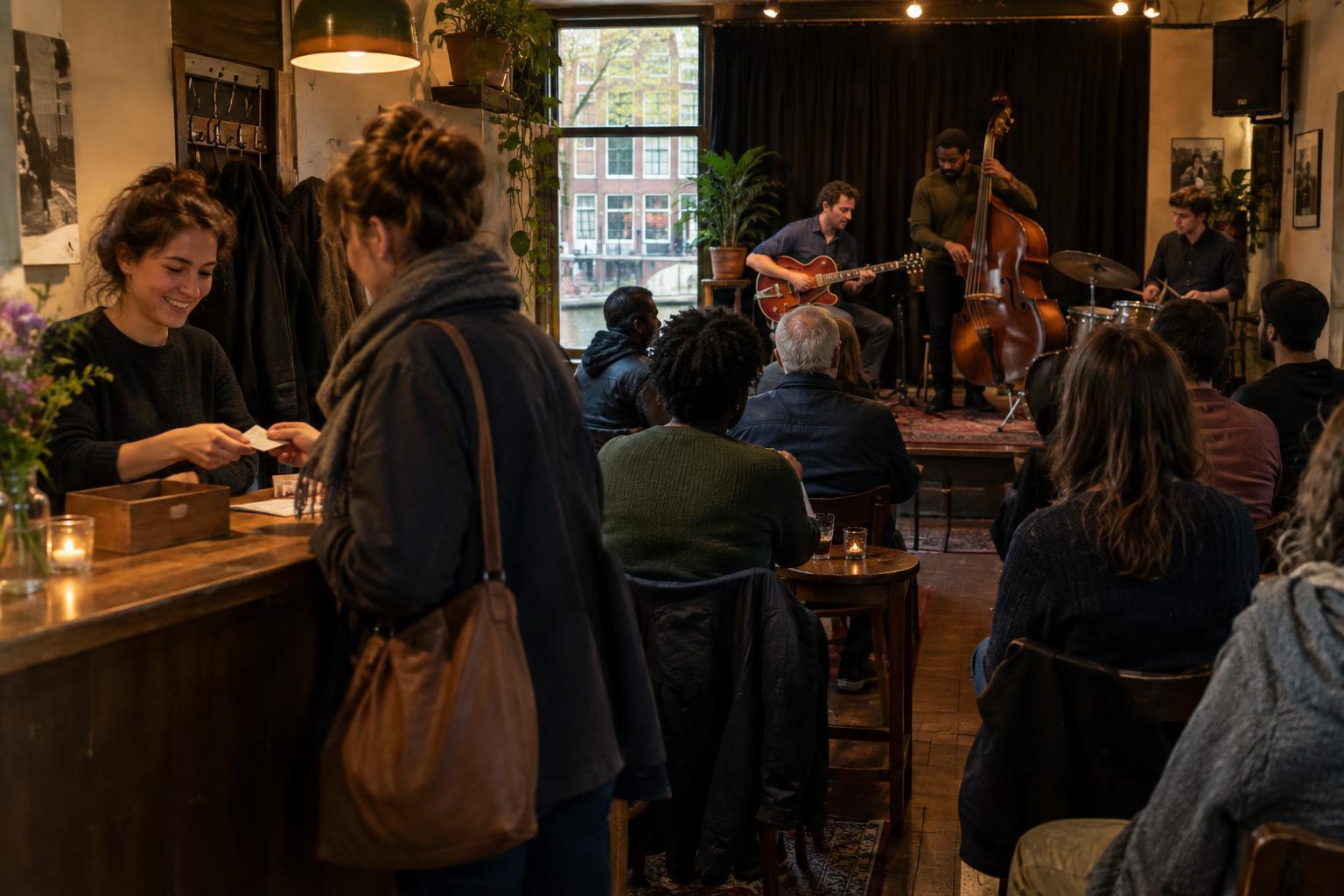
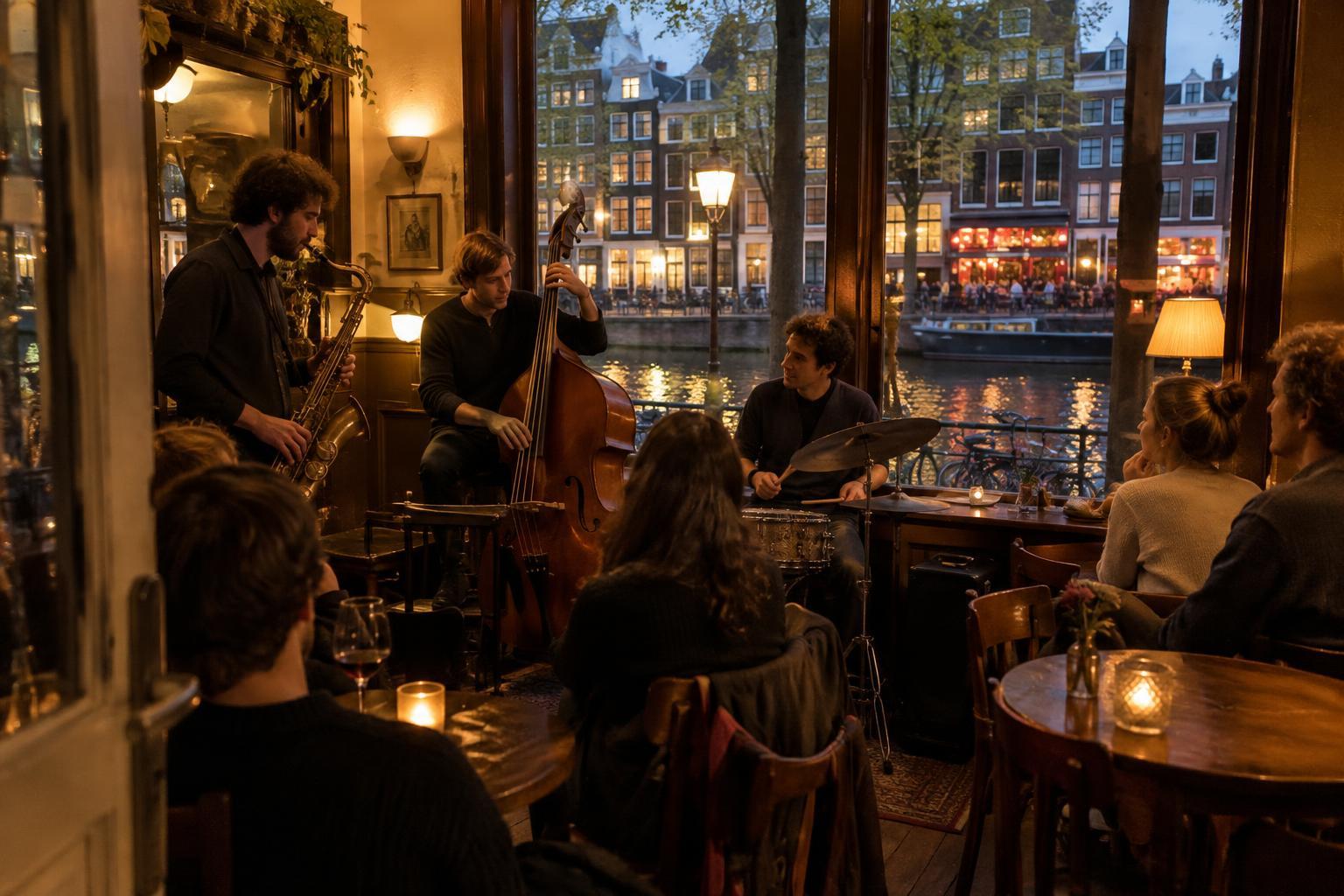
Café performances often trade scale for proximity. A small jazz group, songwriter or acoustic ensemble can turn an ordinary room into a place for close listening. There may be little separation between performer and audience, and a modest change in volume or tempo can feel significant. These nights can also offer a welcoming way to encounter unfamiliar local musicians without committing to a large production.
The trade-off is that cafés are social spaces. Some events draw a hushed audience; at others, conversation continues around the music. If attentive listening matters to you, look for clues in the event description, ask about seating when appropriate, and arrive with enough time to settle in. Keep your own conversation low while someone is performing, particularly in an intimate room where every voice carries. Buying a drink or something to eat, if you can, is a straightforward way to support a hospitality venue hosting music.
Concert halls: space to hear detail
Concert halls tend to make listening the main activity. Seating, sightlines and room acoustics can bring out details that are harder to catch in a busy café or on a crowded dance floor. Amsterdam’s Concertgebouw is closely associated with orchestral and other acoustic performances, while the Muziekgebouw aan ’t IJ presents a setting for contemporary music and other listening-led programmes. Bimhuis is another useful reference point for listeners interested in jazz and improvised music. These are examples of different musical settings, not a complete map of the city’s stages.
A hall is a good choice when you want to follow the shape of a piece from beginning to end. Check the programme notes if available, but do not worry about knowing the music in advance. Arriving before the start makes it easier to find your place without disturbing others. Phone screens, wrappers and whispered commentary can be surprisingly noticeable during quiet passages, so it helps to put distractions away before the performance begins.
Follow the music beyond a single night
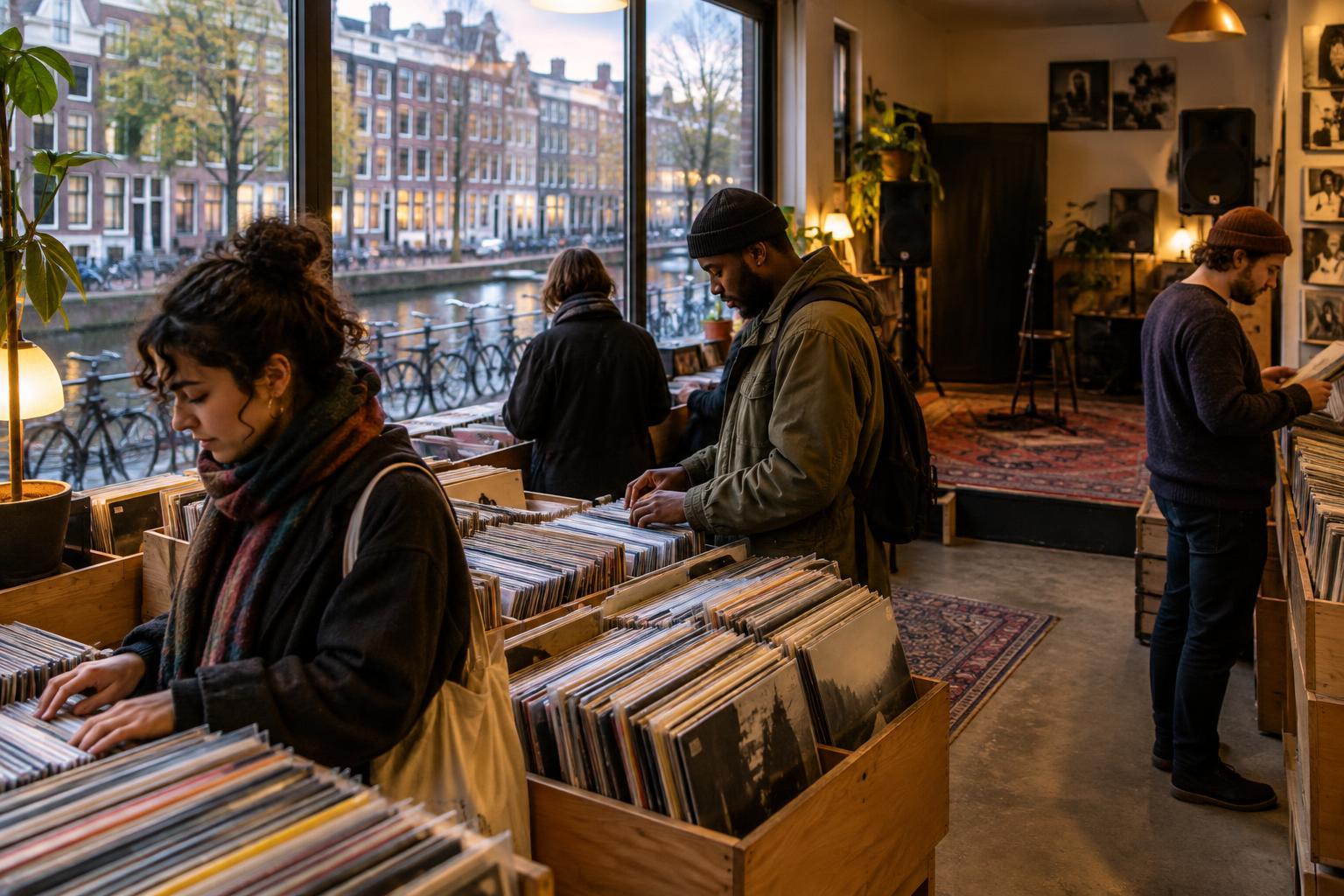
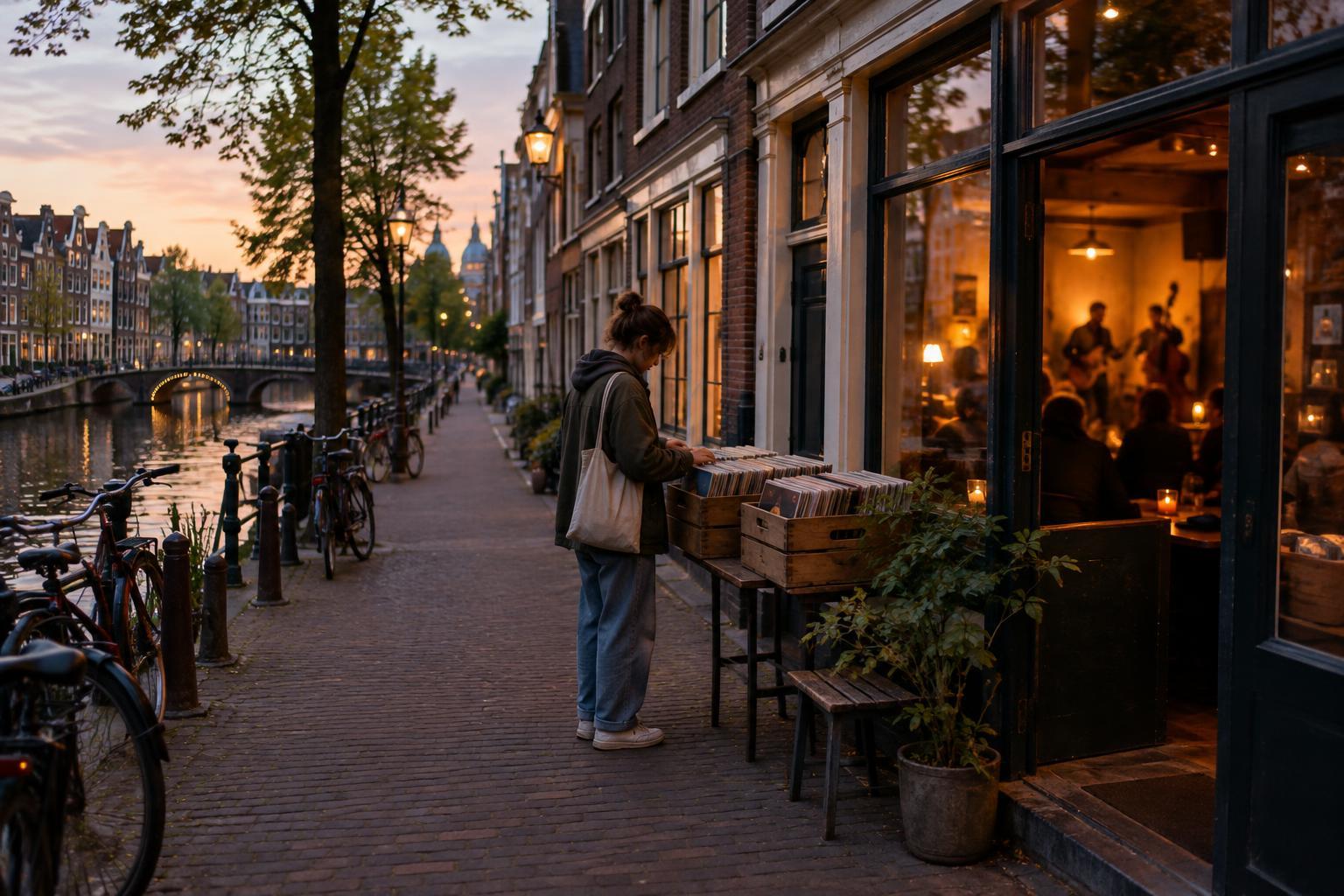
Amsterdam’s live and recorded music cultures can enrich each other. A club set may send you looking for the records a DJ blended together. A café performance might introduce a musician whose earlier work deserves a longer listen at home. A concert can make a familiar recording sound new by revealing what changes when musicians share a room with an audience. None of these experiences replaces the others.
To choose your next outing, ask what you want from the evening: to dance, to discover, or to concentrate. Then check the event format, likely standing or seated arrangement, start time and ticket details rather than relying on a venue’s reputation alone. Leave room for a surprise, too. The most memorable introduction to a style of music may come not from a famous stage, but from finding the right sound in the right-sized room.