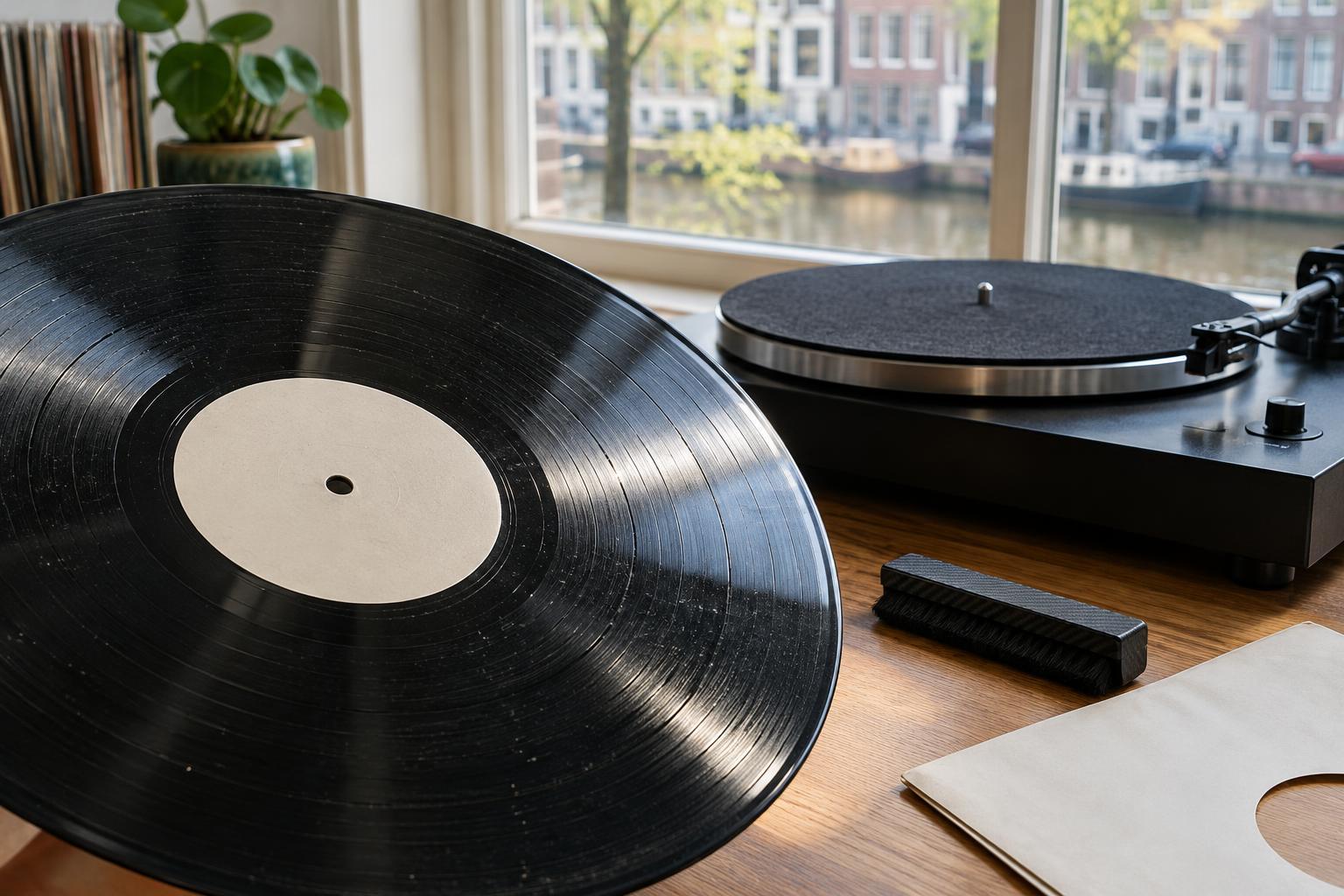
A 78 is a speed, not a material
Most familiar LPs and singles are made from vinyl. Many older discs designed to play at 78 revolutions per minute, however, are made from shellac-based compounds. These records can be heavier and more brittle than vinyl. They may also contain other materials, and their paper labels can be especially susceptible to moisture.
Not every 78 is shellac. Some were pressed on vinyl or other materials, and appearance alone may not settle the question. Before cleaning a disc, check any reliable information you have about its pressing and look closely at its condition. If you cannot identify the material, do not assume that a cleaner safe for an LP will be safe for the 78. A cautious first step is to remove loose surface dust without applying liquid.
Why a vinyl cleaning routine can cause trouble
Some vinyl-cleaning fluids contain alcohol. Alcohol can damage shellac, so a product described simply as a record cleaner is not necessarily suitable for a shellac 78. Even alcohol-free methods need thought: soaking a disc or letting liquid run across its label can leave stains or loosen a label. Water can also be a concern for damaged discs or pressings with materials that react poorly to moisture.
Physical handling matters as much as chemistry. A brittle 78 is less forgiving of a drop, pressure at the edge or vigorous scrubbing. A cleaning machine, brush or cloth that works well on a flexible LP is not automatically a good choice for an older disc. The aim is to lift dirt from the grooves while introducing as little liquid, friction and pressure as possible.
Start with inspection and dry dust removal
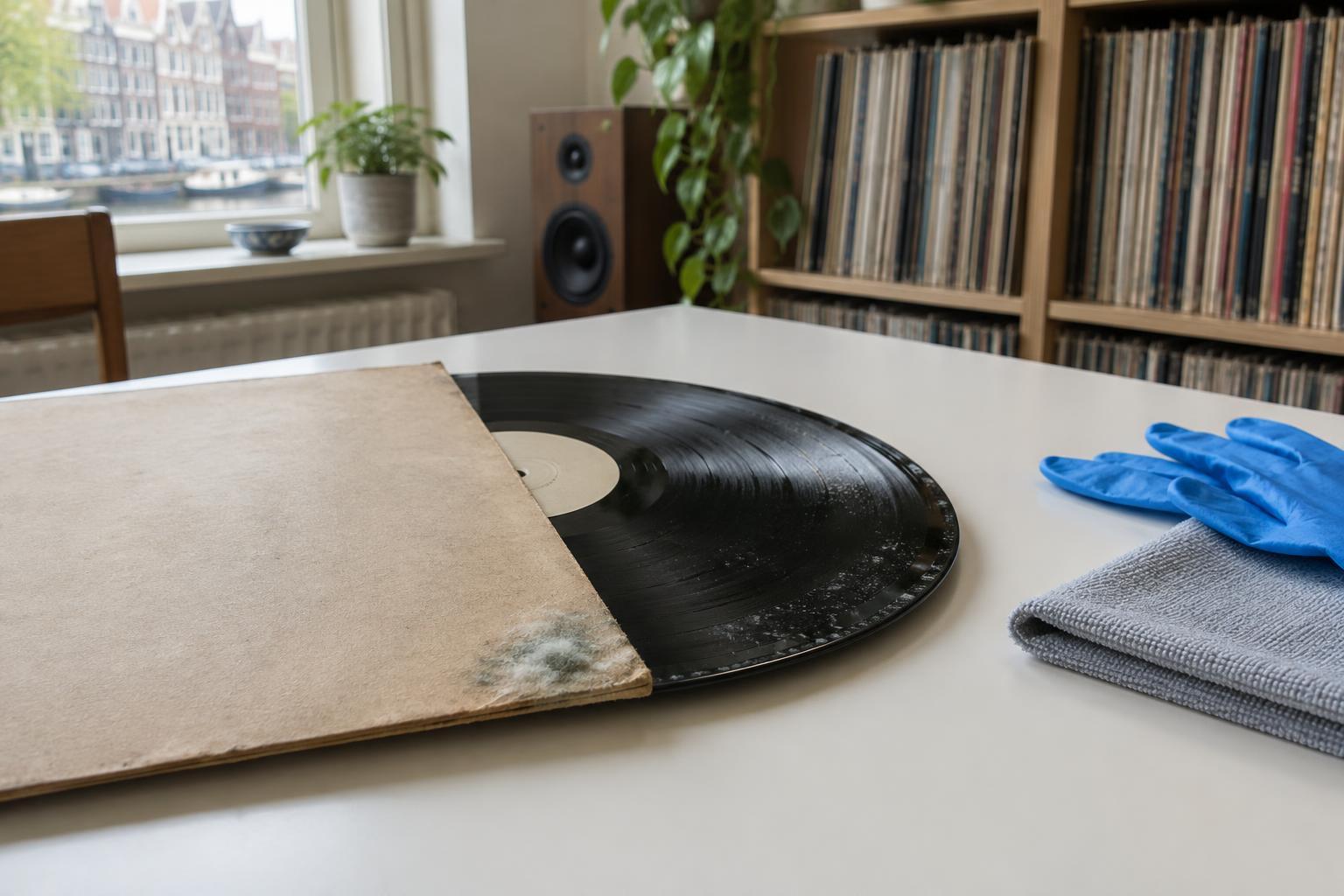
Work on a clear, stable surface with clean hands. Hold the record by its edge and label area rather than touching the grooves. Check for cracks, chips, flaking, a loose label or anything stuck to the playing surface. If the disc is cracked, avoid flexing it to inspect the damage; even gentle handling can make a crack worse.
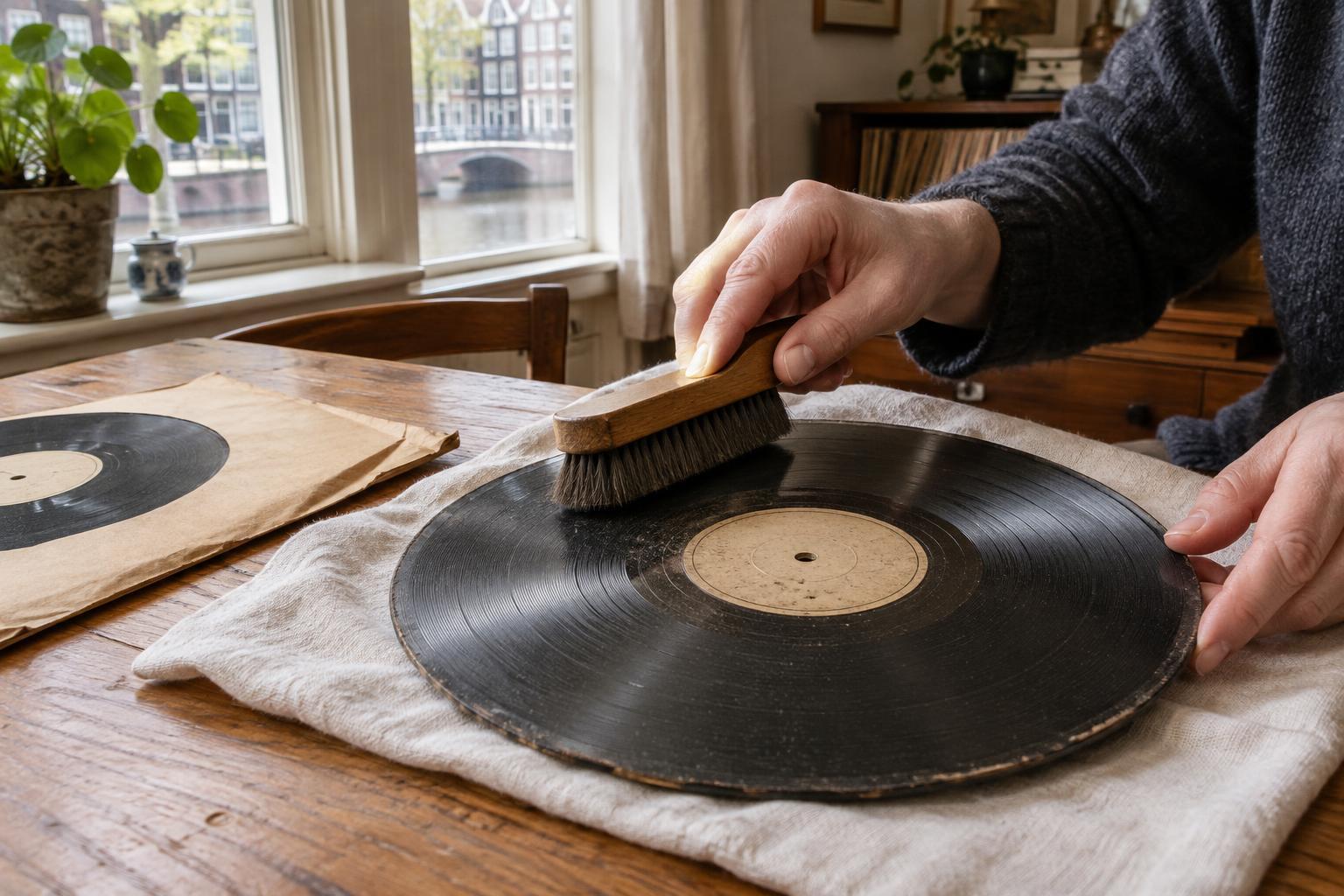
For an intact record, begin with a soft, clean brush intended for records. Use a light touch, following the direction of the grooves, and lift away loosened dust rather than grinding it into the surface. Keep the brush clean so it does not transfer grit from another record. A dry pass will not remove every deposit, but it can make the disc safer to handle and may be enough when the remaining marks are merely cosmetic.
Do not pick at stubborn spots with a fingernail or hard tool. If material seems bonded to the groove, pause before trying to remove it. The risk of scratching the record may outweigh the benefit of getting it completely clean.
Treat wet cleaning as a separate decision
If dry brushing is insufficient and you are confident the disc is shellac and structurally sound, a small amount of distilled water applied with a soft, clean cloth or suitable brush may help lift ordinary dirt. Keep liquid off the label, work gently with the grooves, and do not soak or immerse the record. Remove moisture promptly and let the disc dry fully in a safe position before sleeving or playing it.
Avoid alcohol and cleaners whose ingredients you cannot verify. Test any proposed method conservatively rather than cleaning an entire collection in one session. If a disc has an unusual surface, a fragile label, a crack or significant value to you, ask a specialist experienced with 78s before using liquid. There is no single wet-cleaning recipe guaranteed to suit every old pressing.
Care continues after cleaning
Once the record is dry, place it in a clean sleeve that supports it without forcing it. Store 78s upright with adequate support, away from places where they might be bent, knocked or exposed to large changes in temperature and humidity. Avoid stacking a heavy pile of discs where a record at the bottom could be stressed.
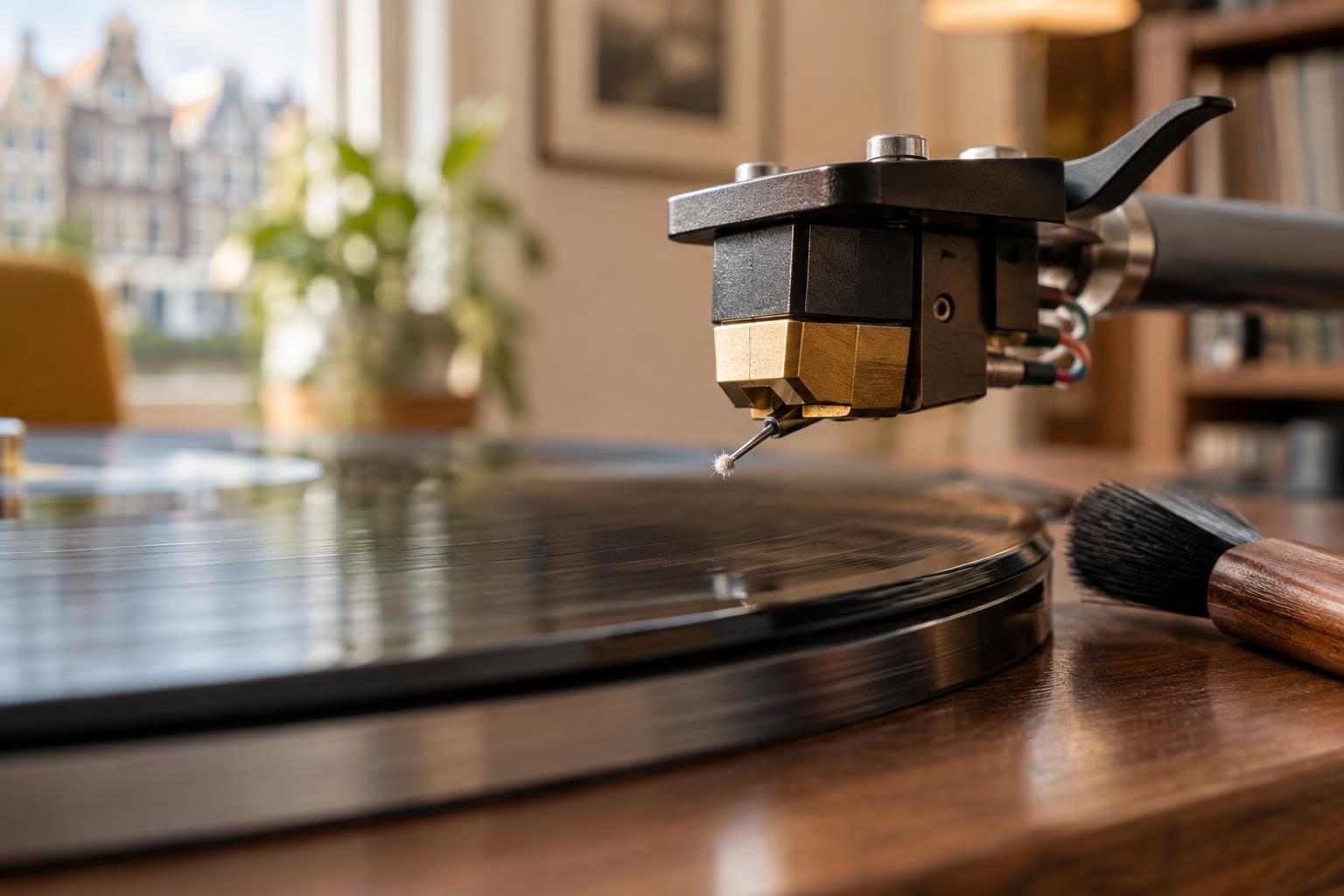
Cleaning is only one part of preserving a 78. Playing one also calls for equipment and a stylus suited to its groove; an LP stylus is not a substitute. If you are unsure about your setup, check it before putting the disc on the turntable. Taking time to identify the pressing, remove dust gently and stop when a treatment feels uncertain will usually serve an old record better than trying to make it look new.